Does the upper back feel stiff when turning, reaching overhead or sitting for long periods? Limited movement in the thoracic spine can make these everyday actions feel less comfortable.
The thoracic spine is the middle portion of the back, extending from the base of the neck to the bottom of the rib cage. It plays an important role in upper-body rotation, extension and overall movement.
Thoracic spine mobility exercises help practise these movements through a comfortable range of motion. They can be useful for people who spend long hours sitting, train regularly or want to improve upper-back movement.
Here are six practical exercises that can be performed at home with little or no equipment.
Why Is Thoracic Spine Mobility Important?
The thoracic spine is designed to move in several directions, including rotation and extension. When movement feels restricted, activities such as turning the torso, reaching overhead or performing certain gym exercises may feel less natural.
Improving thoracic mobility can help:
- Practise comfortable upper-back rotation.
- Improve movement during overhead activities.
- Support better control during upper-body exercises.
- Reduce the feeling of stiffness caused by prolonged positions.
Mobility exercises do not correct every cause of upper-back discomfort, but they can help maintain and practise comfortable movement.
What Are the Best Thoracic Spine Mobility Exercises?
These exercises focus on rotation, extension and controlled movement through the upper back. Move slowly and avoid forcing the spine into a deeper stretch.
1. Seated Thoracic Spine Extension
This exercise practises extending the upper back while keeping the lower body stable.
How to perform:
- Sit on a sturdy chair with feet flat on the floor.
- Place the hands behind the head or cross the arms over the chest.
- Keep the lower back relatively still.
- Gently lean the upper back backward over the chair’s backrest.
- Return to the starting position.
Perform 8–10 controlled repetitions.
2. Open Book Stretch
The open book stretch focuses on thoracic rotation and helps practise turning the upper body while lying on the side.
How to perform:
- Lie on one side with knees bent and stacked.
- Extend both arms in front of the chest, with palms together.
- Slowly open the top arm and rotate the upper body toward the opposite side.
- Keep the knees together and avoid forcing the movement.
- Bring the arm back to the starting position.
Perform 8 repetitions per side.
3. Thread the Needle
Thread the needle is a gentle rotation exercise performed on hands and knees.
How to perform:
- Start on all fours with hands beneath shoulders and knees beneath hips.
- Slide the right arm beneath the left arm.
- Lower the right shoulder gently toward the floor.
- Keep the hips steady as the upper back rotates.
- Return to the starting position and repeat on the other side.
Perform 6–8 repetitions per side.
4. Cat-Cow Stretch
Cat-cow encourages controlled spinal movement, including movement through the thoracic region.
How to perform:
- Begin on hands and knees.
- Inhale and gently lift the chest while allowing the upper back to move into extension.
- Exhale and round the back, gently drawing the shoulder blades apart.
- Move smoothly between both positions.
Perform 8–10 repetitions.
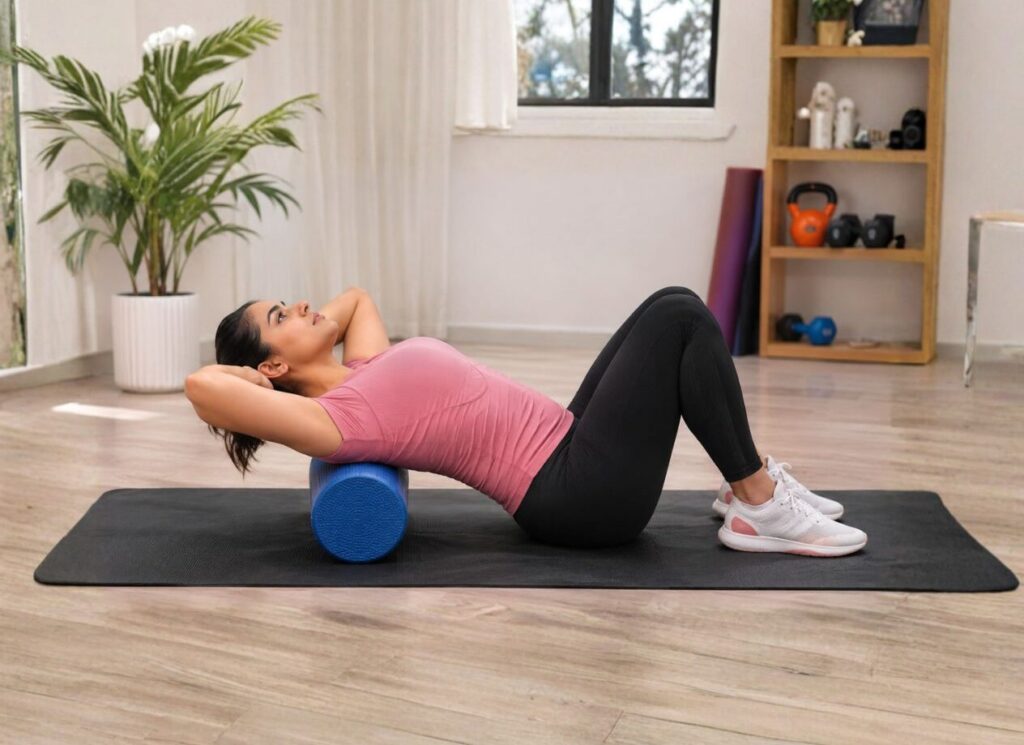
5. Thoracic Extension Over a Foam Roller
A foam roller can help practise upper-back extension by providing support beneath the thoracic spine.
How to perform:
- Sit on the floor with knees bent and feet flat.
- Place a foam roller horizontally beneath the upper back.
- Support the head with the hands.
- Gently lean backward over the roller without arching excessively through the lower back.
- Return to the starting position and reposition the roller slightly if needed.
Perform 6–8 gentle repetitions.
6. Wall Slides
Wall slides combine shoulder movement with upper-back and shoulder-blade control.
How to perform:
- Stand facing a wall or with the back against a wall, depending on comfort.
- Place the arms against the wall in a comfortable bent position.
- Slowly slide the arms upward.
- Keep the ribs from lifting excessively and avoid forcing the shoulders.
- Lower the arms with control.
Perform 8–10 repetitions.
How Can These Thoracic Mobility Exercises Be Combined?
A short routine can be performed before an upper-body workout or during a movement break.
| Exercise | Repetitions |
|---|---|
| Seated Thoracic Extension | 8–10 |
| Open Book Stretch | 8 per side |
| Thread the Needle | 6–8 per side |
| Cat-Cow Stretch | 8–10 |
| Foam Roller Extension | 6–8 |
| Wall Slides | 8–10 |
Start with one round and keep the movements comfortable. The routine should feel controlled rather than tiring.
What Should Be Avoided During Thoracic Mobility Training?
A few simple points can help make the exercises more comfortable:
- Avoid forcing a rotation or extension beyond a comfortable range.
- Keep the lower back from taking over during upper-back extension.
- Move slowly instead of bouncing into a stretch.
- Do not hold the breath during movement.
- Stop if an exercise causes sharp pain, tingling or worsening symptoms.
If upper-back stiffness is persistent, follows an injury or is accompanied by significant pain, consult a qualified healthcare professional before continuing.
How Often Should Thoracic Spine Mobility Exercises Be Done?
These exercises can be practised several times per week, depending on comfort and training needs. A short session of five to ten minutes may be enough to practise upper-back movement.
Consistency matters more than pushing for a deeper range of motion in every session. Gradually, controlled practice can help make rotation and extension feel more familiar.
Final Thoughts
The thoracic spine contributes to many everyday and gym movements, from turning the body to reaching overhead. When the upper back feels stiff, focused mobility exercises can help practise rotation and extension in a controlled way.
Start with a few movements, maintain comfortable technique and build the routine gradually. For additional upper-body mobility, explore these upper-back stretches to improve mobility.
Move Better with O’Coach! Explore guided workouts and mobility routines to support an active lifestyle. Download the O’Coach App.
Best Thoracic Spine Mobility Exercises for Upper-Back Movement