Do your hips feel stiff during squats or other everyday movements? Limited hip mobility can affect flexibility, balance and lower-body exercise performance.
Limited hip mobility can make these movements challenging. Your hips play an important role in walking, running, squatting, climbing stairs and maintaining balance. They need enough flexibility, strength and control to move comfortably in different directions.
The solution is not simply to stretch your hips more. A good mobility routine should combine controlled joint movements, flexibility exercises and strength training.
Why Is Hip Mobility Important?
The hip is a ball-and-socket joint that allows movement in several directions, including flexion, extension, rotation and movement towards or away from the body’s midline.
Add a quick stretching session to your routine with these 5-minute hip stretches.
Good hip mobility helps you perform everyday activities and exercises with greater control. It is particularly important for:
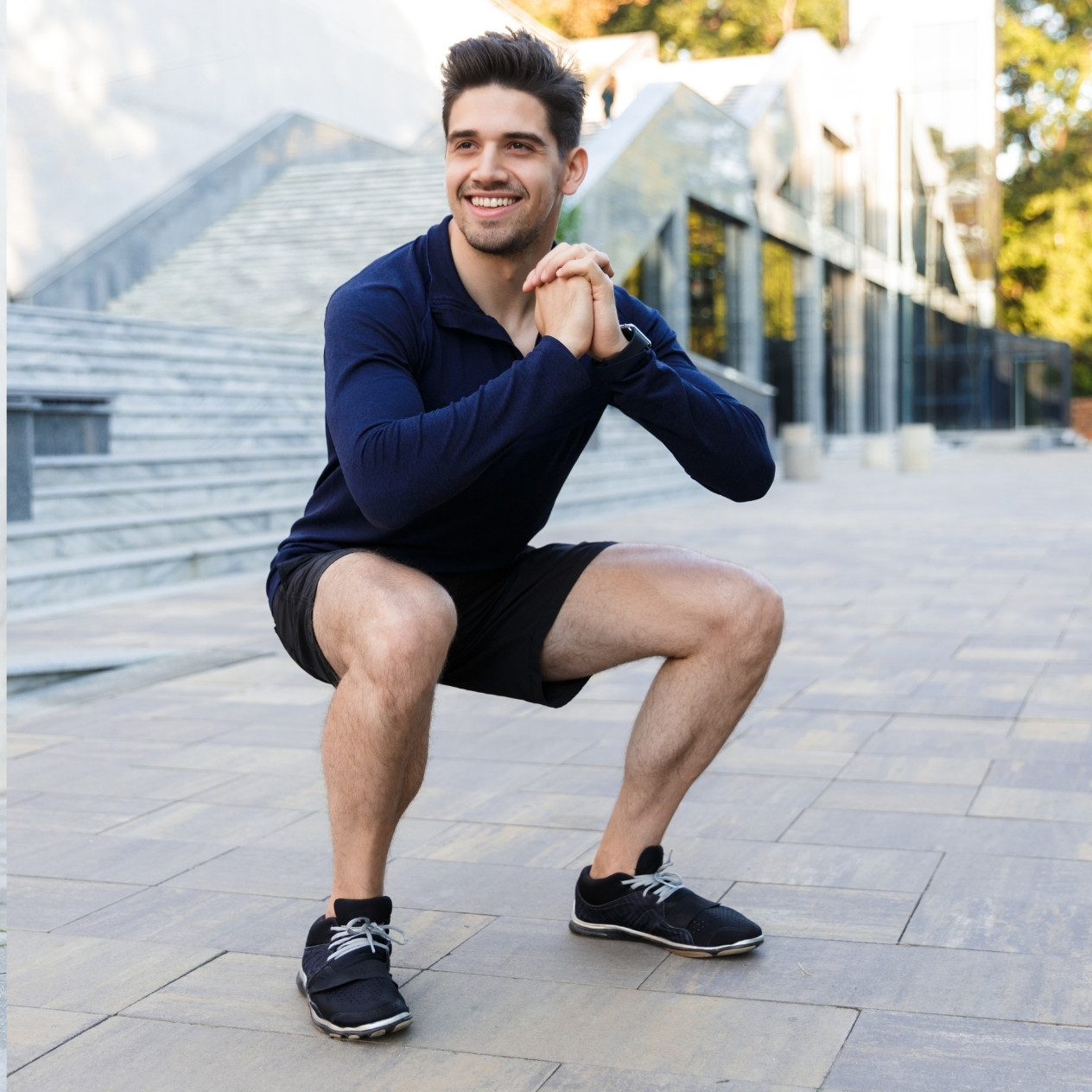
- Squatting: Allows your hips to bend comfortably as you lower your body.
- Walking and running: Supports the movement of your legs forwards and backwards.
- Balance: Helps control your body during single-leg activities.
- Lower-body training: Supports movements such as lunges, deadlifts and step-ups.
- Everyday movement: Makes activities such as getting up from a chair, climbing stairs and putting on shoes easier.
Hip mobility is not just about how far you can stretch. It also involves controlling your available range of motion.
8 Best Hip Mobility Exercises to Improve Movement
The following exercises combine active mobility, stretching and strength work. Choose movements that address the areas where you feel restricted.
1. 90/90 Hip Switches
Focus: Hip internal and external rotation.
The 90/90 position trains your hips to rotate in both directions. It is particularly useful if you find it difficult to sit cross-legged or rotate your hips comfortably.
How to perform:
- Sit on the floor with both knees bent approximately 90 degrees.
- Position one leg in front and the other behind you.
- Keep your chest upright and hands on the floor for support.
- Rotate both knees towards the opposite side.
- Move slowly between positions without forcing your knees down.
Recommended: 8–10 controlled repetitions.
Tip: Keep your movement controlled. Use your hands for support if your hips feel restricted.
2. World’s Greatest Stretch
Focus: Hip flexors, glutes and thoracic rotation.
This multi-joint movement combines a deep lunge with upper-back rotation. It is useful for preparing your hips and upper body for lower-body training.
How to perform:
- Start in a high plank position.
- Step your right foot outside your right hand.
- Lower your hips while keeping your back leg extended.
- Bring your right elbow towards the inside of your right foot if comfortable.
- Place your right hand on the floor and rotate your left arm towards the ceiling.
- Return to the starting position and switch sides.
Recommended: 5 repetitions per side.
Tip: Rotate through your upper back rather than twisting your lower back.
3. Adductor Rockbacks
Focus: Inner thighs and hip mobility.
Restricted inner-thigh movement can make wide-stance squats and lateral movements uncomfortable. Adductor rockbacks help you practise hip movement while controlling your torso.
How to perform:
- Start on your hands and knees.
- Extend one leg out to the side with your foot flat on the floor.
- Keep your spine neutral and hands beneath your shoulders.
- Slowly move your hips backwards towards your heel.
- Return to the starting position without rounding your back.
Recommended: 8–12 repetitions per side.
Tip: Move only as far as your hips comfortably allow.
4. Half-Kneeling Hip Flexor Stretch
Focus: Hip flexors and hip extension.
Long periods of sitting keep the hips in a flexed position. This stretch works on the muscles at the front of your hip and helps you practise comfortable hip extension.
How to perform:
- Kneel with your right knee on a mat and your left foot forward.
- Keep your torso upright.
- Gently tuck your pelvis and tighten your abdominal muscles.
- Shift your hips forward until you feel a stretch at the front of your right hip.
- Maintain the position without arching your lower back.
Hold: 20–30 seconds per side.
Tip: Avoid pushing your hips too far forward. The stretch should be felt at the front of your hip, not in your lower back.
5. Cossack Squat
Focus: Hip adductors, glutes and lateral hip mobility.
Unlike traditional squats, the Cossack squat introduces side-to-side movement. It combines hip mobility with lower-body strength and control.
How to perform:
- Stand with your feet wider than shoulder-width apart.
- Shift your weight towards your right leg.
- Bend your right knee and move your hips backwards.
- Keep your left leg extended with your toes pointing upwards if comfortable.
- Maintain a controlled torso position.
- Push through your bent leg to return to standing and switch sides.
Recommended: 5–8 repetitions per side.
Tip: Use a smaller range of motion initially. Hold a stable support if you need help maintaining balance.
6. Pigeon Pose
Focus: Glutes and external hip rotators.
Pigeon Pose places the front hip in a flexed and externally rotated position. It can be useful for people who feel tightness around their glutes and outer hips.
How to perform:
- Start on your hands and knees.
- Bring one knee forward towards your wrist.
- Extend the opposite leg behind you.
- Keep your hips comfortable and supported.
- Stay upright or gradually lower your upper body if your mobility allows.
Hold: 20–30 seconds per side.
Tip: Never force your front knee into the position. Use a supine figure-four stretch as an alternative if you experience knee discomfort.
7. Glute Bridge
Focus: Glutes, hip extension and pelvic control.
Mobility should be supported by strength. Glute bridges train the muscles responsible for hip extension and help develop control through this movement.
How to perform:
- Lie on your back with your knees bent and feet flat on the floor.
- Position your feet approximately hip-width apart.
- Tighten your abdominal muscles and squeeze your glutes.
- Lift your hips until your body forms a comfortable straight line from shoulders to knees.
- Pause briefly and lower slowly.
Recommended: 10–15 repetitions.
Tip: Avoid arching your lower back to lift your hips higher.
8. Standing Hip CARs (Controlled Articular Rotations)
Focus: Active hip control and rotational mobility.
Hip CARs involve moving the hip slowly through a controlled circular range of motion. They help you practise controlling the joint in different directions rather than relying only on passive stretching.
How to perform:
- Stand upright beside a wall or stable support.
- Shift your weight onto one leg.
- Lift the opposite knee towards your chest.
- Move your knee outwards while keeping your pelvis as still as possible.
- Rotate your leg backwards and return to the starting position.
- Complete the movement slowly, then change sides.
Recommended: 3–5 controlled circles per direction and leg.
Tip: Keep the circle small enough to prevent your lower back or pelvis from rotating excessively.
For additional support with post-surgery movement, explore the O’Coach hip exercises after joint replacement surgery.
How to Build a Simple Hip Mobility Routine
You do not need to perform all eight exercises in every session. Start with this practical sequence:
| Exercise | Repetitions |
|---|---|
| Standing Hip CARs | 3 per leg |
| 90/90 Hip Switches | 8 total |
| Adductor Rockbacks | 8 per side |
| Half-Kneeling Hip Flexor Stretch | 20–30 sec per side |
| Cossack Squats | 6 per side |
| Glute Bridges | 12 reps |
Perform the routine slowly, focusing on controlled movement rather than speed. You can use it before lower-body training or as a separate mobility session.
How to Improve Hip Flexibility and Mobility Over Time
If you want to understand how to increase mobility in hips, consistency and progression matter more than performing dozens of stretches.
Follow these principles:
- Practise regularly: Include hip mobility work three to four times per week, adjusting to your recovery and training schedule.
- Combine stretching with strength: Include hip strength and mobility exercises such as glute bridges and controlled lunges.
- Work in different directions: Practise hip flexion, extension, internal rotation and external rotation.
- Progress gradually: Increase your comfortable range of motion without forcing deeper positions.
- Maintain control: Use slow, deliberate movements instead of relying on momentum.
Hip Mobility Exercises for Seniors
Hip mobility is also important as people get older because it supports walking, getting up from chairs and climbing stairs.
For older adults, suitable hip exercises for seniors can include:
- Seated knee lifts: Practise controlled hip flexion while sitting on a stable chair.
- Supported standing hip circles: Hold a chair and make small, controlled circles with one leg.
- Standing hip extensions: Hold a stable support and move one leg backwards without arching your back.
- Supported side leg raises: Lift one leg sideways while keeping your torso upright.
Start with a comfortable range and use support whenever needed. People with pain, recent surgery or significant mobility limitations should seek guidance from a qualified healthcare professional before starting a new programme.
Final Thoughts
Better hip mobility comes from combining flexibility, strength and controlled movement. Include exercises that train hip rotation, extension and lateral movement rather than relying on stretching alone.
Start with a few movements, practise consistently and gradually increase your range of motion. With the right approach, hip mobility training can support more comfortable movement during workouts and everyday activities.
Explore more guided exercise routines with the O’Coach app.


Best Hip Mobility Exercises to Improve Flexibility and Mobility