Ever stood up after hours at your desk and felt like your lower back needed a moment to catch up? That stiff, restricted feeling can make even simple movements uncomfortable.
You don’t always need an intense workout to get moving again. A few gentle lower back mobility exercises can help your spine move more comfortably, ease feelings of stiffness and improve flexibility.
Gentle movement can be a useful part of a back-care routine. Explore the Exercises for Back Pain plan for more guided exercises to support back mobility.
Here are five movements worth adding to your routine.
Why Does Your Lower Back Feel So Stiff?
Your lower back works with your hips, pelvis and surrounding muscles whenever you bend, turn or change positions. Sitting for long periods, limited physical activity and muscle fatigue can all contribute to stiffness.

But stretching harder isn’t necessarily the answer. Your spine needs comfortable movement in different directions, including bending, extending and rotating.
That’s where a combination of back mobility exercises and gentle stretches can help.
Your 5-Move Lower Back Mobility Reset
Instead of holding one stretch for several minutes, try moving through these five exercises in sequence. Each one focuses on a different aspect of lower-back movement.
1. Cat-Cow Stretch — Get Your Spine Moving

Start with Cat-Cow to gently move your spine through flexion and extension. This is a useful warm-up if your back feels stiff after sitting.
Try it: Get on your hands and knees, keeping your wrists beneath your shoulders. Slowly round your back towards the ceiling, then gently lower your abdomen and lift your chest. Move between both positions for 8–10 controlled repetitions.
Keep the movement comfortable rather than forcing a deep arch.
2. Pelvic Tilts — Improve Lower Back Control
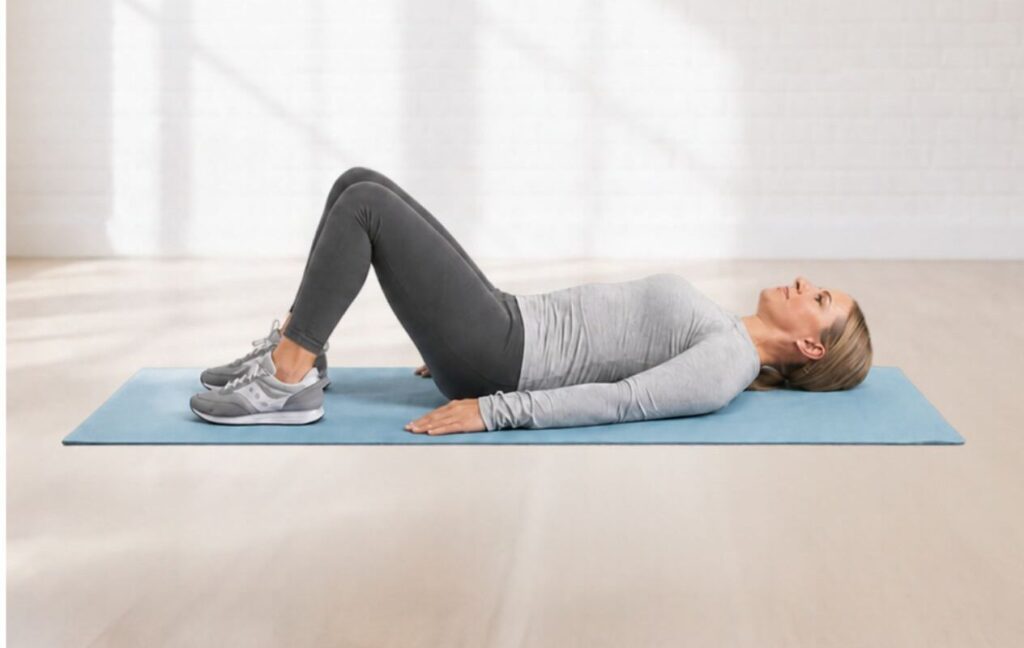
Sometimes, improving back mobility starts with small movements. Pelvic tilts help you practise controlling your pelvis and lumbar spine without placing much demand on your body.
Try it: Lie on your back with your knees bent and feet flat on the floor. Gently tighten your abdominal muscles and tilt your pelvis until your lower back moves towards the floor. Relax and return to neutral.
Repeat 10–12 times, moving slowly.
3. Single Knee-to-Chest Stretch — Ease Lower Back Tightness
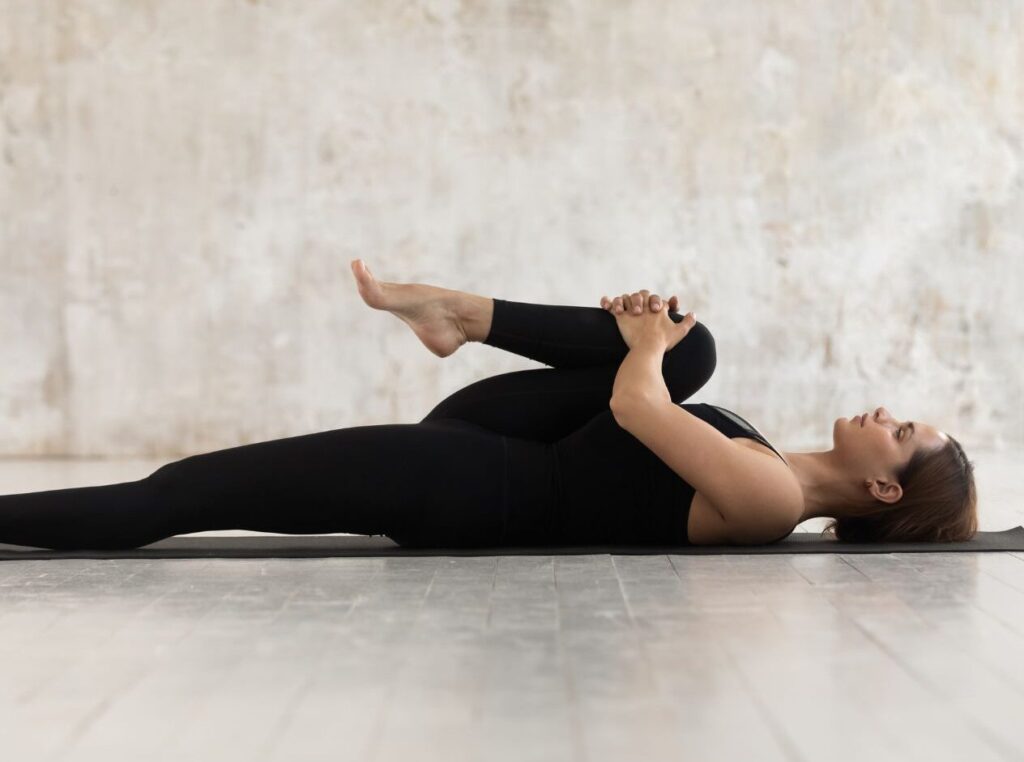
If you’re looking for gentle lower back stretches, the knee-to-chest movement is a simple option. It creates a comfortable stretch around the lower back and hips.
Try it: Lie on your back with both knees bent. Bring one knee towards your chest and hold it gently with your hands. Keep the opposite foot on the floor and avoid pulling forcefully.
Hold for 20–30 seconds per leg, breathing naturally.
Back mobility involves more than the lower spine. Include gentle upper-body movements with the Upper Back Stretch plan to work on upper-back flexibility and movement.
4. Supine Knee Rolls— Restore Gentle Rotation
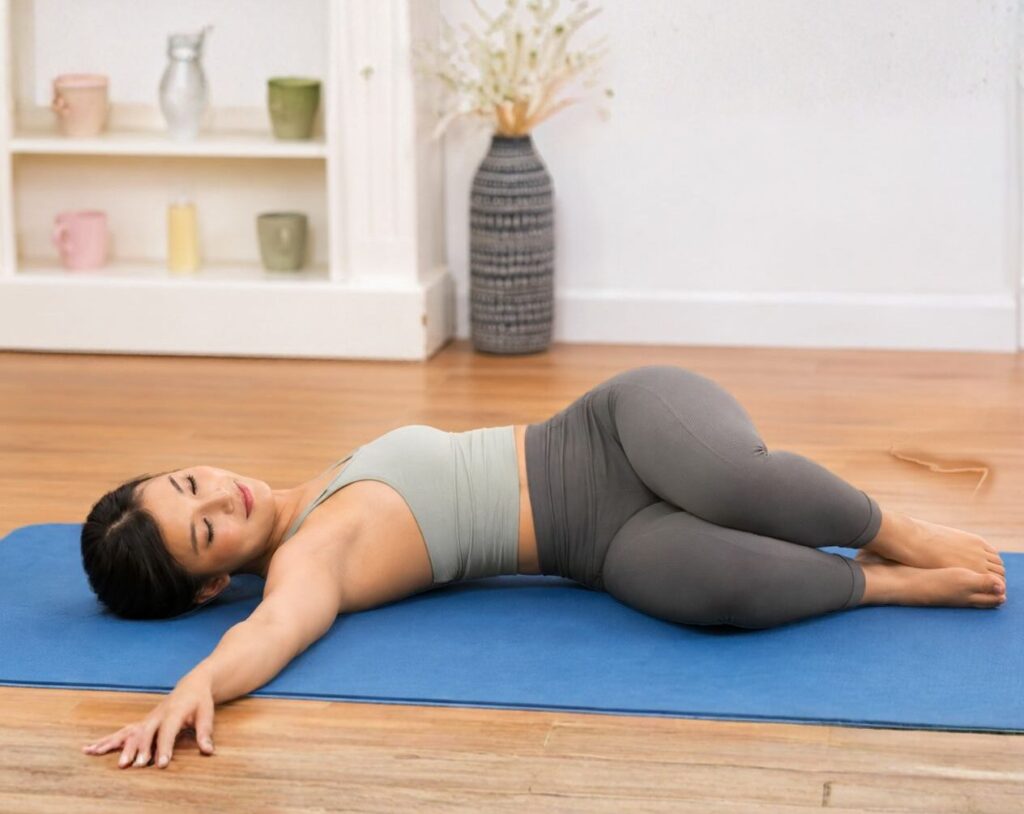
Your back doesn’t just bend forward and backward. Controlled rotation is another important part of everyday movement.
Try it: Lie on your back with your knees bent and feet together. Keep your shoulders relaxed as you slowly lower both knees towards one side. Return to the centre and repeat on the opposite side.
Complete 8 slow repetitions per side, staying within a pain-free range.
5. Child’s Pose — Finish with a Gentle Stretch

Child’s Pose is a familiar yoga movement and one of the commonly used stretches for lower back flexibility. It also stretches the hips and encourages relaxed breathing.
Try it: Start on your hands and knees. Slowly move your hips towards your heels while reaching your arms forward. Allow your back to lengthen comfortably without forcing your hips down.
Hold for 20–30 seconds, then slowly return to the starting position.
If the position feels uncomfortable on your knees or back, shorten the movement or skip it.
When Should You Do These Lower Back Stretches?
You can use this short routine at different points in your day:
- After sitting for long periods: To introduce gentle movement after being inactive.
- Before a workout: Use the controlled mobility movements to prepare for activity.
- After a workout: Include comfortable static stretches when your muscles feel tight.
- During your daily routine: Practise a few movements to maintain back flexibility.
Start with one round, 3–5 days a week, and adjust according to your comfort. These movements are not a substitute for an individual treatment plan for chronic lower back pain.
What If Your Lower Back Still Feels Stiff?
More stretching isn’t always better. Regular walking, changing positions throughout the day and suitable strengthening exercises can also support back function.
Avoid pushing through pain. If stiffness comes with persistent or worsening pain, seek advice from a healthcare professional. New bladder or bowel control problems, or numbness around the groin, require urgent medical assessment.
Stay Active with O’Coach!
Explore guided workouts and exercise routines to support better mobility and fitness.
Final Thoughts
Improving lower back mobility doesn’t have to involve complicated routines. These five movements help your spine practise bending, rotating and stretching through a comfortable range.
Start small, move consistently and focus on how your back feels rather than how far you can stretch.


5 Lower Back Mobility Exercises to Reduce Stiffness