A push workout places repeated demands on the chest, shoulders and triceps. Pull training involves the back and biceps, while leg day requires coordinated movement through the hips, knees and ankles. Using the same warm-up for every session may not adequately prepare the areas involved in each workout.
This is where dynamic stretching exercises can make a difference. These controlled movements take the joints and muscles through a comfortable range of motion before training. Choosing stretches according to the workout can help prepare the body for the movements ahead.
Here is how to organise dynamic stretching for push, pull and leg days.
Why Dynamic Stretching Should Match the Training Day
Different workouts require different movement patterns. A push session involves pressing and reaching, a pull session involves rowing and pulling, and leg training requires hip, knee and ankle mobility.
A training-specific mobility routine can help:
- Prepare the joints for the movements involved in the workout.
- Gradually increase the range of motion used during exercise.
- Practise movement patterns before adding resistance.
- Reduce the feeling of stiffness after long periods of inactivity.
Dynamic stretching is not a replacement for strength training or proper warm-up sets. It is one part of preparing for a workout.
1. Push Day: Prepare the Chest, Shoulders and Triceps
Push workouts commonly include bench presses, shoulder presses, chest flyes and triceps exercises. These movements involve the shoulders, chest and upper arms.
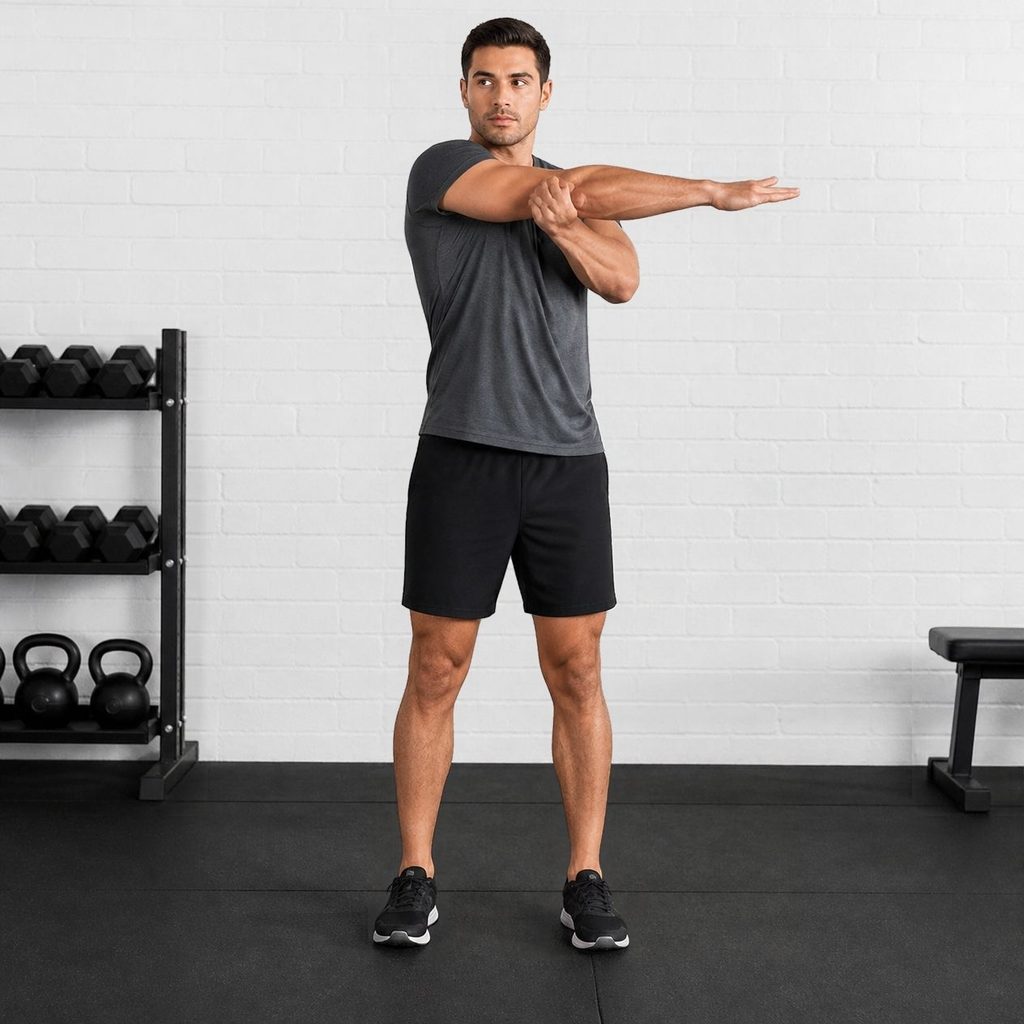
The following dynamic stretches focus on shoulder movement, chest mobility and upper-body control.
Arm Circles
Arm circles gently move the shoulder joints through a controlled range of motion before pressing exercises.
How to perform:
- Stand upright with arms extended out to the sides.
- Make small circles with both arms.
- Gradually increase the circle size without forcing the movement.
- Complete 10–15 circles forward and backward.
Standing Arm Swings
This movement prepares the shoulders and chest for repeated upper-body movements.
How to perform:
- Stand with feet shoulder-width apart.
- Swing both arms forward and cross them gently in front of the chest.
- Open the arms out to the sides.
- Repeat the movement smoothly for 10–12 repetitions.
Wall Slides
Wall slides encourage controlled shoulder movement and involve the upper back and shoulder muscles.
How to perform:
- Stand with the back against a wall.
- Position the arms in a goalpost shape, with elbows bent.
- Slowly slide the arms upwards while maintaining comfortable contact with the wall.
- Return to the starting position.
- Repeat 8–10 times.
Push Day Focus: Arm circles, arm swings and wall slides can prepare the shoulders and upper body before pressing movements. Follow them with lighter sets of the first exercise.
Ready for a complete push workout? Follow the 5-Minute Push Day Warm-Up Routine before training.
2. Pull Day: Prepare the Back, Shoulders and Arms
Pull workouts include exercises such as lat pulldowns, seated rows, pull-ups and biceps curls. These movements involve the lats, upper back, rear shoulders and arms.
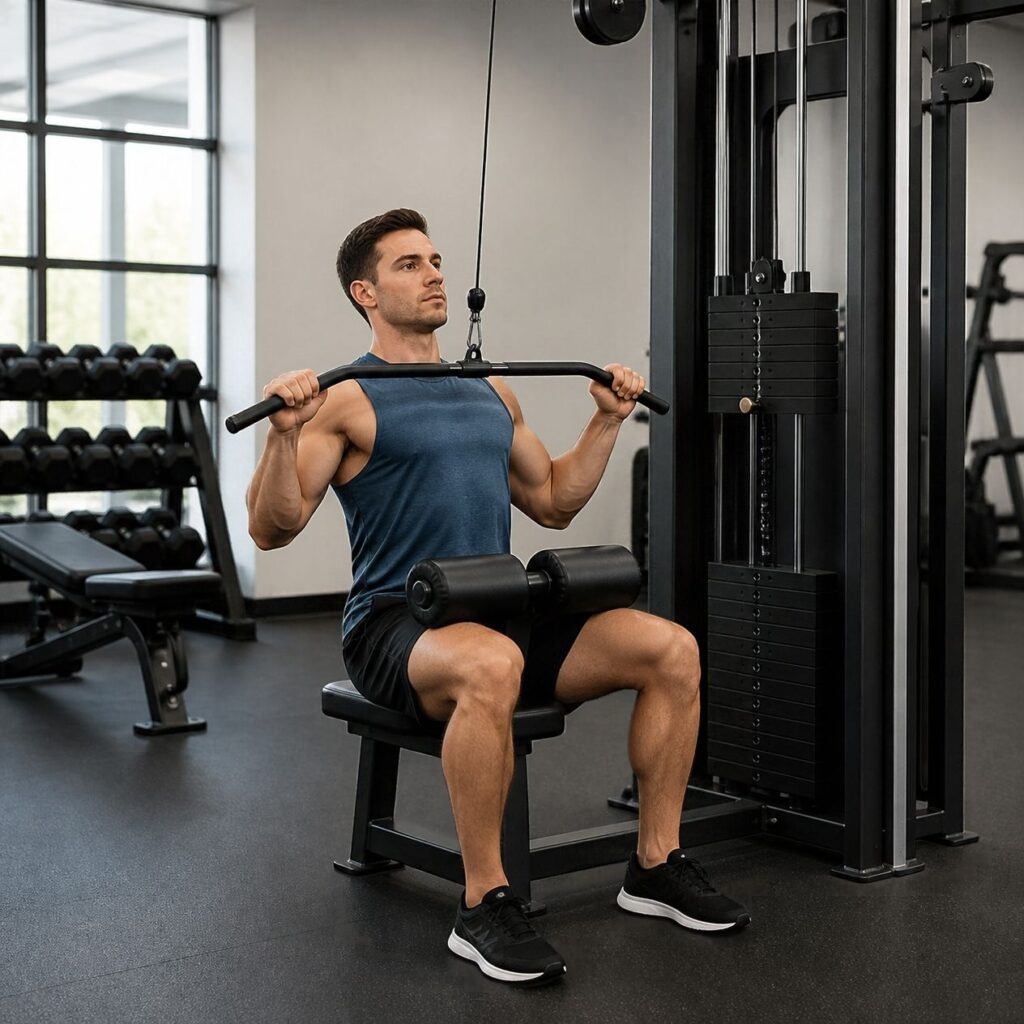
A pull-day mobility routine should include controlled shoulder movement and upper-back rotation.
Standing Thoracic Rotations
Thoracic rotations encourage movement through the upper and middle back, which contributes to many pulling movements.
How to perform:
- Stand with feet shoulder-width apart.
- Cross the arms over the chest.
- Rotate the upper body gently towards one side while keeping the hips facing forward.
- Return to the centre and rotate to the opposite side.
- Complete 8–10 repetitions per side.
Shoulder Rolls
Shoulder rolls move the shoulders through a gentle circular pattern and help prepare the upper body for training.
How to perform:
- Stand tall with arms relaxed.
- Lift both shoulders towards the ears.
- Roll them backwards and lower them gently.
- Repeat 10 times, then reverse the direction.
Standing Torso Twists
This movement introduces gentle trunk rotation and helps prepare the body for exercises involving coordinated upper-body movement.
How to perform:
- Stand with feet slightly wider than hip-width.
- Keep the arms relaxed or bent in front of the chest.
- Rotate the torso gently from side to side.
- Allow the movement to remain controlled rather than forcing the rotation.
- Complete 10–12 repetitions on each side.
Pull Day Focus: Prioritise shoulder mobility and upper-back rotation before rowing and pulldown exercises. Begin the workout with lighter resistance to practise the pulling movement.
Prepare for pulling movements with these 7 Pull-Up Warm-Up Exercises.
3. Leg Day: Prepare the Hips, Knees and Ankles
Leg training involves more than the quadriceps and hamstrings. Squats, lunges, leg presses and deadlifts also require coordinated movement through the hips and ankles.

These dynamic stretches help prepare the lower body for common leg-day exercises.
Leg Swings
Leg swings introduce controlled hip movement and prepare the legs for exercises involving forward and backward motion.
How to perform:
- Stand beside a wall or stable support.
- Hold the support for balance.
- Swing one leg forward and backward in a comfortable range.
- Keep the upper body steady.
- Complete 10–12 swings before switching legs.
Walking Lunges
Walking lunges involve the hips, knees and ankles while introducing a movement pattern used in many lower-body exercises.
How to perform:
- Stand upright with feet hip-width apart.
- Step forward with one foot.
- Lower the body into a comfortable lunge position.
- Push through the front foot and bring the back leg forward.
- Continue alternating legs for 8–10 steps.
Ankle Rocks
Ankle rocks encourage forward movement of the knee over the foot, which is useful when preparing for squat and lunge variations.
How to perform:
- Stand facing a wall with one foot slightly forward.
- Keep the front heel flat on the floor.
- Slowly move the knee towards the wall over the toes.
- Return to the starting position.
- Complete 10 repetitions per ankle.
Leg Day Focus: Prioritise hip movement, leg control and ankle mobility before squats, lunges and other lower-body exercises.
Improve lower-body movement with these Best Hip Mobility Exercises.
How to Organise Dynamic Stretching Across the Training Week
A simple way to use these movements is to match the mobility routine with the day’s workout.
| Training day | Areas to prepare | Suggested movements |
|---|---|---|
| Push Day | Chest and shoulders | Arm circles, arm swings, wall slides |
| Pull Day | Upper back and shoulders | Thoracic rotations, shoulder rolls, torso twists |
| Leg Day | Hips, legs and ankles | Leg swings, walking lunges, ankle rocks |
Perform each movement with control rather than rushing through repetitions. Around 5–8 minutes of dynamic mobility is a practical starting point, depending on the exercises and training session.
After completing the routine, begin with lighter warm-up sets of the main workout. Gradually increase the resistance before moving to working sets.
Dynamic Stretching Mistakes to Avoid
Even simple movements can become less effective when performed without control. Keep these points in mind:
- Moving too quickly: Fast, uncontrolled movements can make it harder to maintain proper technique.
- Forcing the range of motion: Move within a comfortable range instead of pushing into discomfort.
- Using the same routine every day: Match the movements to the muscles and joints involved in the workout.
- Skipping warm-up sets: Dynamic stretching does not replace gradual preparation with lighter weights.
- Ignoring discomfort: Stop any movement that causes sharp pain or unusual discomfort.
Make Mobility Part of Every Training Day
Push, pull and leg workouts involve different movement patterns, so the warm-up should reflect those demands. A few minutes of targeted dynamic stretching can help prepare the shoulders, upper back, hips and ankles before resistance training.
Choose movements that match the session, perform them with control and gradually progress into the main workout. Consistent preparation can make mobility an important part of a well-structured training routine.
Download the O’Coach App to explore guided workouts and exercise routines.