
Emotional Well-Being Is a Daily Practice
Emotional well-being isn’t a destination it’s a lifelong practice. Lasting healing comes from caring for your mind, body, and spirit while building healthy habits that support long-term resilience.
Holistic healing offers exactly that. Rather than treating symptoms alone, it focuses on the whole person. And for those walking the path of addiction recovery, this comprehensive approach doesn’t just support sobriety it helps build a meaningful, fulfilling life beyond it.
What Is Holistic Healing?
Holistic healing recognizes the connection between the mind, body, and spirit. Rather than treating individual symptoms, it addresses the underlying factors that influence overall well-being.
This approach doesn’t replace conventional care. Instead, it works alongside therapies and medical treatment to promote emotional balance, physical wellness, and healthier coping strategies.
Why a Holistic Approach Matters
Therapy plays a vital role in emotional healing, but true well-being often requires more than conversations alone. Stress, trauma, and emotional challenges affect both the mind and body.
Holistic practices such as mindfulness, movement, breathwork, proper nutrition, and meaningful relationships help regulate the nervous system and strengthen emotional resilience. Together, they create a more balanced and sustainable path toward long-term well-being.
7 Ways Holistic Healing Supports Emotional Well-Being
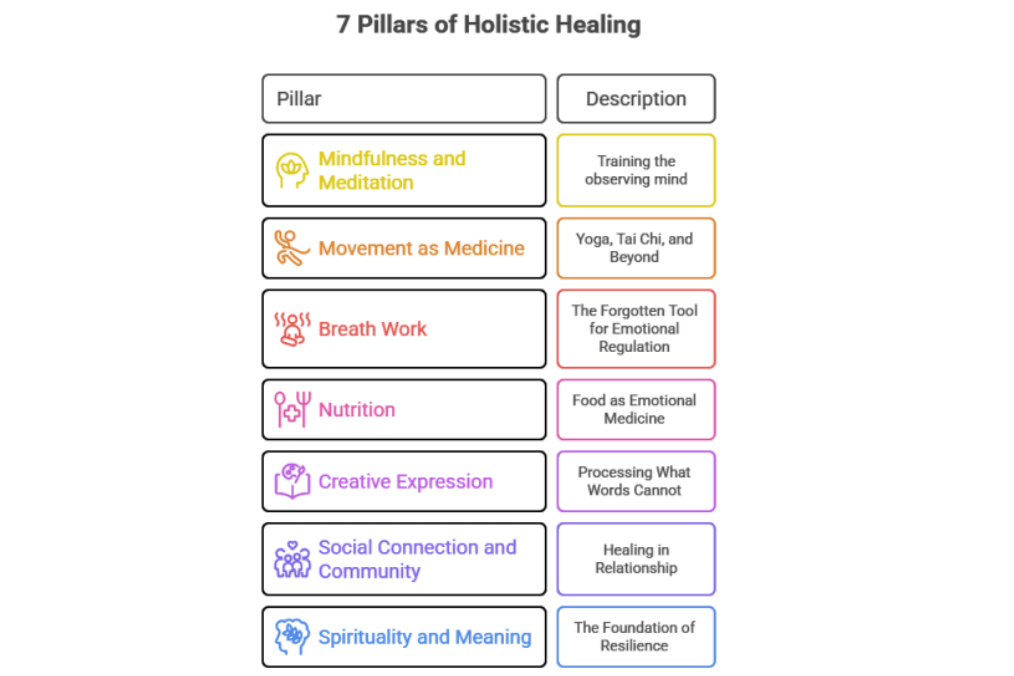
1. Practice Mindfulness and Meditation
Mindfulness teaches you to observe your thoughts without judgment instead of becoming overwhelmed by them. With regular practice, it can reduce stress, improve emotional regulation, and increase mental clarity.
For people in addiction recovery, mindfulness may also help manage cravings and build healthier responses to difficult emotions.
2. Use Movement to Support Mental Health
Physical movement benefits both the body and the mind. Activities such as yoga, Tai Chi, stretching, or even daily walks reduce stress while improving focus and emotional balance.
Regular movement also helps regulate the nervous system, making it easier to manage anxiety and build resilience over time.
3. Calm Your Mind Through Breathwork
Breathing exercises are one of the simplest ways to reduce stress. Techniques like diaphragmatic breathing and Pranayama activate the body’s natural relaxation response, helping lower anxiety and improve focus.
Since breathwork can be practiced anywhere, it’s an easy daily habit for supporting emotional well-being.
4. Nourish Your Body With Healthy Nutrition
Nutrition plays an important role in emotional health. Through the gut-brain connection, the foods you eat influence mood, energy, and cognitive function.
A balanced diet rich in whole foods supports brain health and emotional stability, while limiting processed foods can help reduce fatigue and mood fluctuations. For those in recovery, proper nutrition also supports physical healing and overall wellness.
5. Express Your Emotions Creatively
Creative outlets such as writing, music, painting, or dance offer healthy ways to process emotions that may be difficult to express through words alone.
Creative expression encourages self-reflection, relieves emotional tension, and promotes personal growth, making it a valuable part of holistic healing.
6. Build Strong Social Connections
Emotional well-being thrives on meaningful relationships. Spending time with supportive friends, family, or community groups can reduce stress, improve resilience, and create a sense of belonging.
For individuals in addiction recovery, support groups and positive relationships provide encouragement and accountability. Giving support to others through volunteering or simply being present for loved ones can also foster purpose and strengthen emotional health.
7. Find Meaning and Purpose
A sense of purpose plays an important role in long-term emotional well-being. For some, this comes through spirituality or faith, while for others it may come from nature, personal values, community, or meaningful goals.
Connecting with something larger than yourself can help build resilience during difficult times and provide motivation for lasting personal growth.
Developing healthy habits takes consistency. Tools like the O’Coach app can support your wellness journey with guided exercise, yoga, meditation, and other daily practices that contribute to overall well-being.
The Science Behind Holistic Healing
Many holistic practices are supported by growing scientific research. Studies have shown that mindfulness, meditation, yoga, and other mind-body techniques can reduce stress, improve emotional regulation, and support overall mental well-being.
When combined with evidence-based treatments, holistic healing provides a more comprehensive approach that supports both immediate recovery and long-term emotional health.
Bringing Holistic Healing Into Daily Life
You don’t need to make dramatic changes to benefit from holistic healing. Small, consistent habits can make a meaningful difference over time.
- Start your day with a few slow, deep breaths.
- Include some form of movement in your daily routine.
- Eat balanced, nutrient-rich meals whenever possible.
- Spend a few minutes journaling or practicing gratitude.
- Connect with a friend or loved one regularly.
- Set aside time for mindfulness or meditation each day.
These simple practices can help reduce stress, improve emotional balance, and build lasting resilience.
Why Holistic Healing Works
Holistic healing focuses on every aspect of well-being rather than treating emotional health as a separate issue. Physical wellness, mental clarity, emotional balance, and a sense of purpose all work together to support long-term resilience.
Instead of aiming to eliminate every challenge, holistic healing helps you respond to life’s ups and downs with greater awareness, confidence, and healthy coping strategies.
Conclusion
Emotional well-being is an ongoing journey, not a final destination. Holistic healing offers a balanced approach by caring for the mind, body, and spirit together, helping individuals build healthier habits and stronger emotional resilience.
Whether you’re managing everyday stress, pursuing personal growth, or recovering from addiction, small and consistent steps can lead to meaningful change over time. By combining holistic practices with professional care when needed, you can create a stronger foundation for long-term well-being and a more fulfilling life.