Walk into any gym and you’ll notice the same thing—big chests, wide backs, but often neglected forearms.
Well-developed forearms stand out because they reflect grip strength, control, and consistent training. If your forearms still feel like an afterthought, the issue is usually training approach rather than genetics.
Here’s how to build stronger, thicker forearms effectively.
Many lifters assume exercises like deadlifts, curls, and pull-ups are enough for forearm growth. While these movements engage your grip, they don’t directly overload the forearm muscles.
1. Stop Relying Only on Regular Workouts
Your forearm flexors and extensors control grip, wrist stability, and finger strength. Without focused training, growth is limited.
Adding forearm-specific exercises into your weekly routine can help improve both grip strength and forearm size over time.
2. Train the Full Grip Chain (From Fingers to Elbows)
Forearm training involves more than wrist curls. Grip strength depends on the coordination of your fingers, hands, wrists, and forearms working together.
Instead of isolating only one movement pattern, focus on exercises that include gripping, twisting, pulling, and holding.
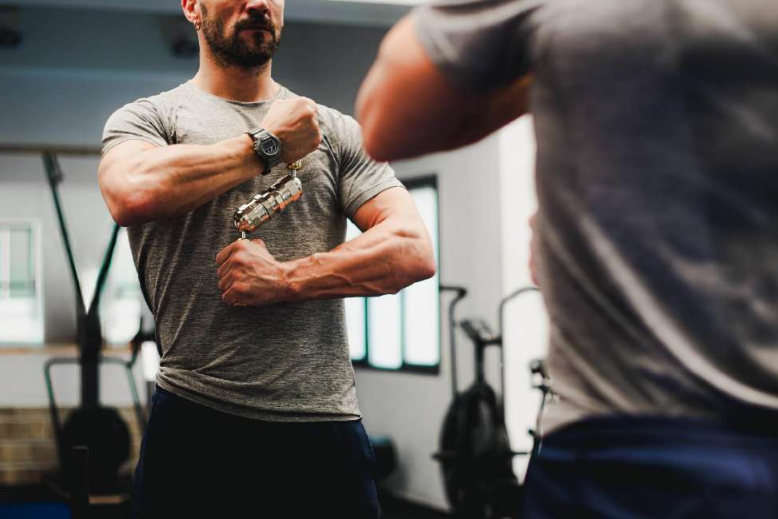
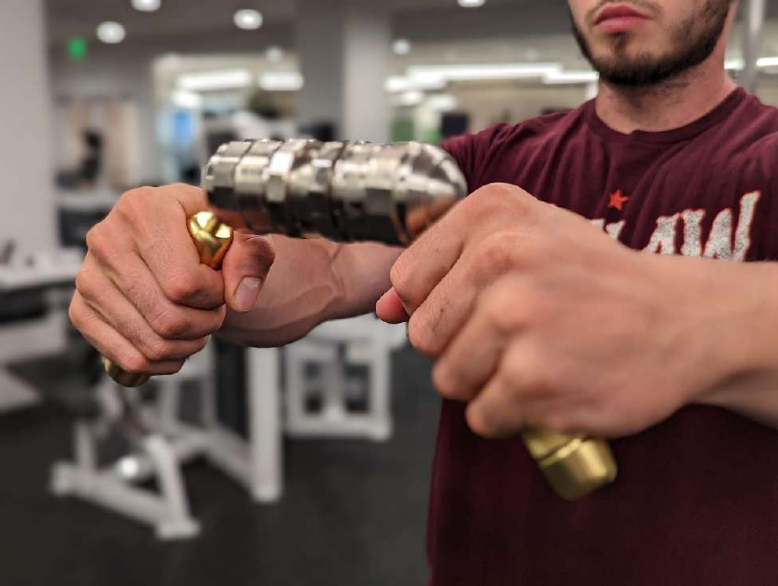
Tools like the Gripzilla Tornado are designed to train rotational grip movement. It’s a compact forearm trainer that uses friction-based resistance instead of weights to build thick and heavy forearms.
3. Use Grip Strength Exercises That Actually Work
Improving grip strength requires variety and consistency. Different movements challenge the forearms in different ways and help develop better muscle control.
Some effective exercises include:
- Farmer’s holds: Grab a pair of heavy dumbbells and hold for 30 to 60 seconds.
- Wrist curls: Both regular and reverse. Focus on slow, full ranges.
- Plate pinches: Hold two smooth plates together using only your fingertips.
- Static hangs: Hang from a pull-up bar until your grip gives out.
- Wrist roller exercises: Classic for wrist and forearm pump.
Mix in short sessions using grip tools like hand grippers. The goal isn’t just brute grip, it’s developing the
coordination, balance, and muscle density that comes from sustained tension.
4. Focus on Forearm Pump and Muscle Endurance
Higher-repetition training can help improve blood flow, endurance, and overall forearm conditioning.
To increase time under tension:
- Aim for 15–20 reps per set
- Keep rest periods short
- Combine grip work with wrist-focused exercises
Forearm vascularity improves as body fat drops, but training also plays a big role. More time under
tension means more capillary density, and that gives you the striated, rope-like look people notice even
through a t-shirt.
You can get creative with your environment, too. Use towels for pull-ups. Carry heavy groceries with a
pinch grip. Train your hands to work in awkward positions.
5. Don’t Ignore Wrist Mobility and Recovery
Your wrists are the anchor point for every movement. If they’re weak or unstable, you’ll never hit your
potential.
Simple movements like:
- Wrist circles
- Fingertip push-ups
- Resistance band twists
can help improve mobility and stability.
For recovery, try light forearm stretches and rotational drills with minimal resistance. They’ll improve
range of motion and prevent stiffness from repeated grip training.
6. Understand the Real Benefits of Grip Strength
Grip strength is more than a visual advantage. It supports better performance across exercises like pull-ups, deadlifts, rows, and carries.
Studies link higher grip strength with better athletic performance, coordination, and even longevity.
Strong hands mean stronger lifts, faster reaction times, and fewer injuries.
Strong grip and forearm strength can also improve control, stability, and overall upper-body performance during training.
That’s why grip-focused exercises are commonly included in strength training, calisthenics, climbing, and other performance-based workouts.
Simple Forearm Training Plan You Should Know
Day 1 — Strength Focus
- Heavy farmer’s holds
- Wrist curls (4×12)
- Plate pinches (3×30 seconds)
Day 2 — Endurance & Control
- Static hangs
- Tornado rotations
- Reverse curls
Day 3 — Pump & Conditioning
- Wrist curl supersets
- Towel pull-ups
- Isometric holds
Follow this routine consistently for a few weeks to improve grip strength, forearm endurance, and muscle definition.
Wrapping Up
Building bigger forearms takes consistency, focused tension, and the right combination of grip training exercises.
Instead of relying only on compound lifts, include movements that directly train grip strength, wrist stability, and forearm control.
Over time, stronger forearms can improve both your performance and overall training strength.