Starting a workout without preparing your body can make the first few sets feel uncomfortable, particularly when your training involves deep squats, overhead presses, lunges or explosive movements. A well-planned warm-up helps you gradually move from rest to exercise.
One useful part of this preparation is dynamic stretching. Unlike traditional stretches where you hold a position, dynamic stretching uses controlled, continuous movements to take your joints and muscles through their available range of motion.
When selected according to your workout, these movements can help prepare your body for the physical demands of training. In this guide, you’ll learn the benefits of dynamic stretching exercises, how to perform them correctly and how to build a practical routine before your workout.
Prepare your body before strength training with the O’Coach general-purpose warm-up routine.
What Is Dynamic Stretching?
- Dynamic stretching involves moving your body through a controlled range of motion without holding the stretched position for an extended period. These movements are designed to prepare muscles and joints for the actions they will perform during exercise.
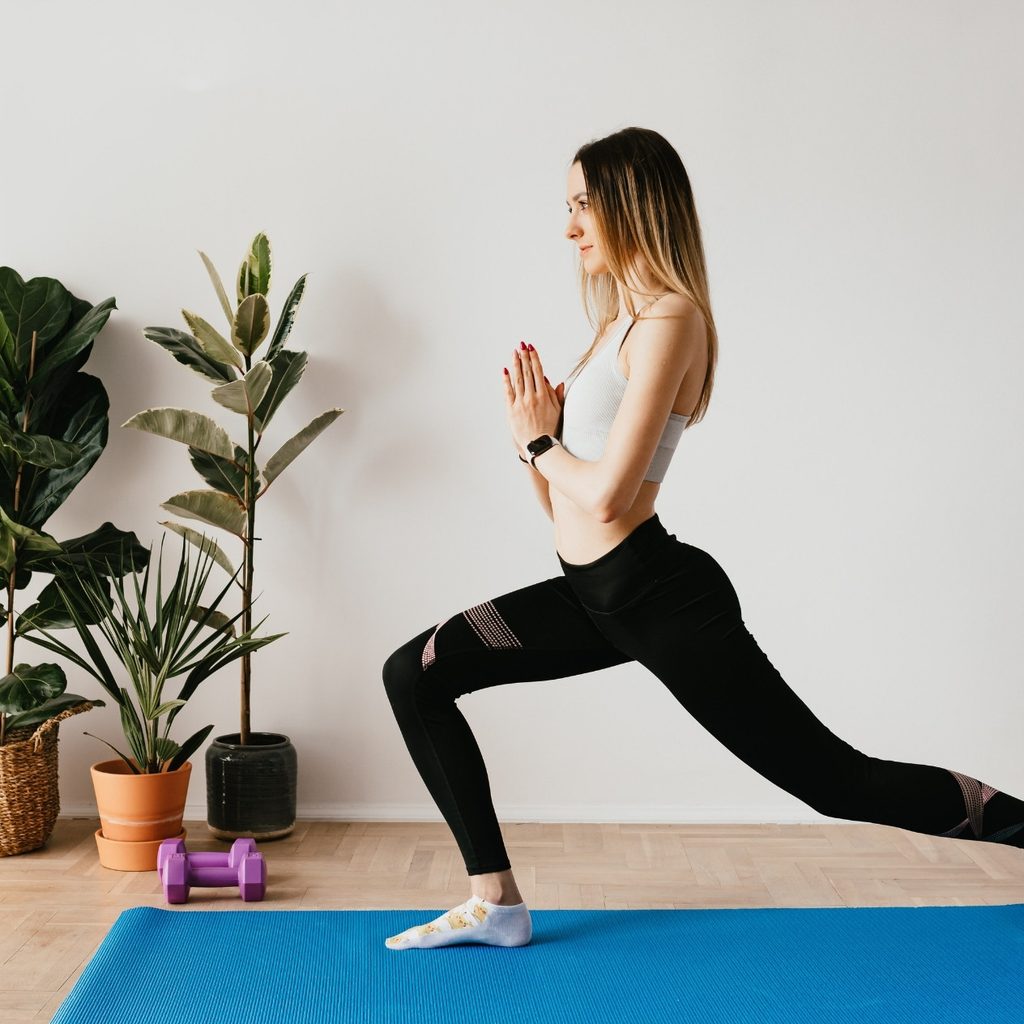
- For example, leg swings prepare the hips for lower-body movements, while walking lunges with torso rotation combine hip mobility with upper-body movement.
- Dynamic stretching is different from static stretching, where you hold a position for a set duration to improve flexibility. Both methods have a place in a fitness programme, but dynamic movements are commonly used as part of a pre-workout warm-up.
5 Important Benefits of Dynamic Stretching
Including suitable dynamic movements in your warm-up can support better preparation for exercise.
1. Improves Movement Range
Controlled movements take your joints through different positions and can temporarily improve your available range of motion. This can be useful before exercises that require substantial hip, shoulder or ankle mobility.
2. Prepares Muscles for Training
Dynamic movements involve repeated muscle contractions. They help transition your body from rest to activity and prepare the muscles involved in your upcoming workout.
3. Supports Better Movement Coordination
Exercises that combine multiple joints and movement patterns help you practise controlling your body. For example, a lunge with a torso rotation requires coordination between the hips, legs and upper body.
4. Gradually Increases Exercise Intensity
A warm-up should build in intensity rather than move immediately from rest to demanding exercise. Dynamic movements provide a way to progress from controlled mobility drills to more workout-specific movements.
5. Helps Prepare You for Workout-Specific Movements
The most useful dynamic stretches are selected according to the activity ahead. Hip-focused movements may be useful before leg training, while shoulder and thoracic mobility drills can prepare you for upper-body sessions.
Add a structured warm-up to your training with this 5-minute full-body warm-up routine.
Note: Dynamic stretching can support preparation and short-term range of motion, but it should not be treated as a guaranteed way to prevent injuries.
7 Effective Dynamic Stretching Exercises to Include in Your Warm-Up
Instead of performing random movements, choose exercises that prepare the joints and muscles you will use during training. The following drills cover the hips, legs, spine, shoulders and upper body.
1. World’s Greatest Stretch
Targets: Hip flexors, glutes, hamstrings, thoracic spine and hip mobility.
This movement combines a deep lunge with upper-back rotation, making it useful for preparing several areas of the body at once.
How to perform it:
- Start in a high plank position with your hands directly beneath your shoulders.
- Step your right foot outside your right hand.
- Keep your back leg extended and lower your hips towards the floor.
- Place your left hand on the floor and rotate your right arm towards the ceiling.
- Follow your raised hand with your eyes, then return it to the floor.
- Step back and repeat on the opposite side.
Recommended volume: 4–6 repetitions per side.
Training tip: Keep your front foot flat and avoid forcing the rotation through your lower back.
2. Inchworm Walkout
Targets: Hamstrings, shoulders, core and posterior chain.
The inchworm combines a forward fold with a controlled walkout into a plank position. It prepares the body for exercises involving the shoulders, trunk and posterior chain.
How to perform it:
- Stand with your feet approximately hip-width apart.
- Hinge at your hips and place both hands on the floor.
- Walk your hands forward until you reach a high plank position.
- Keep your abdomen engaged and avoid allowing your hips to drop.
- Walk your hands back towards your feet and return to standing.
Recommended volume: 5–8 repetitions.
Training tip: Keep your knees slightly bent if your hamstrings feel tight. Move slowly instead of rushing through the walkout.
3. Walking Lunge with Thoracic Rotation
Targets: Quadriceps, glutes, hip flexors and thoracic spine.
This variation adds upper-body rotation to a standard walking lunge. It is particularly useful before lower-body training and activities involving coordinated trunk and leg movement.
How to perform it:
- Stand upright with your feet hip-width apart.
- Take a controlled step forward into a lunge.
- Lower your back knee towards the floor while keeping your front foot flat.
- Rotate your torso towards the front leg.
- Return your torso to the centre and push through your front foot to step forward.
- Repeat on the other side.
Recommended volume: 6–8 repetitions per side.
Training tip: Keep your knee aligned with your toes and rotate through your upper back without twisting your lower back excessively.
4. Lateral Lunge
Targets: Adductors, glutes, quadriceps and hip mobility.
Most traditional lower-body exercises focus on forward and backward movement. Lateral lunges introduce side-to-side movement, helping prepare the hips and legs for movement in different directions.
How to perform it:
- Stand with your feet wider than shoulder-width apart.
- Shift your body weight towards your right side.
- Bend your right knee and push your hips backwards while keeping your left leg extended.
- Keep your chest lifted and your right foot flat on the floor.
- Push through your right foot to return to the starting position.
- Repeat on the opposite side.
Recommended volume: 6–8 repetitions per side.
Training tip: Only lower as far as your hip and ankle mobility comfortably allow. Avoid forcing the movement.
5. Front-to-Back and Lateral Leg Swings
Targets: Hip flexors, glutes, hamstrings and hip mobility.
Leg swings prepare the hips for movements involving forward, backward and side-to-side leg motion. They are useful before squats, lunges, running and other lower-body activities.
How to perform them:
- Stand beside a wall or stable support and hold it lightly.
- Keep your torso upright and swing one leg forward and backward.
- Start with a small range and gradually increase it as the movement becomes comfortable.
- Complete the repetitions, then turn towards the support.
- Swing the same leg across your body and out to the side.
- Repeat with the opposite leg.
Recommended volume: 10–12 swings in each direction per leg.
Training tip: Keep the movement controlled and avoid using momentum to swing your leg excessively high.
6. Arm Circles and Cross-Body Swings
Targets: Shoulders, upper back and shoulder mobility.
This combination prepares the shoulders for pushing and pulling movements. It is useful before bench presses, shoulder presses, rows and upper-body training.
How to perform it:
- Stand upright with your arms extended out to your sides.
- Make small forward circles with both arms.
- Gradually increase the circle size without shrugging your shoulders.
- Reverse the direction.
- Bring your arms across your chest in a controlled swinging motion.
- Open them back out without forcing the shoulders behind your body.
Recommended volume: 10 circles in each direction, followed by 10–12 cross-body swings.
Training tip: Keep your shoulders relaxed and avoid swinging your arms aggressively.
7. Squat-to-Stand Mobility Drill
Targets: Ankles, hips, hamstrings, glutes and upper back.
This drill combines a forward fold with a deep squat. It can help prepare your body for squat variations and other lower-body exercises requiring hip and ankle movement.
How to perform it:
- Stand with your feet approximately shoulder-width apart.
- Hinge at your hips and reach down towards your toes.
- Bend your knees and lower into a comfortable deep squat.
- Hold your ankles or the front of your feet if you can do so comfortably.
- Lift your chest and gently straighten your legs until you feel a stretch through your hamstrings.
- Bend your knees and return to the squat before standing upright.
Recommended volume: 6–8 repetitions.
Training tip: Keep your heels grounded during the squat. Use a shallower position if your ankle or hip mobility is limited.
Dynamic Stretching vs Static Stretching: What Is the Difference?
Both stretching methods can be useful, but they serve different purposes.
| Dynamic stretching | Static stretching |
|---|---|
| Uses controlled, continuous movement | Holds a position for a period of time |
| Moves joints through an active range of motion | Applies a sustained stretch to a muscle |
| Commonly included in pre-workout warm-ups | Often used for flexibility training |
| Example: Walking lunge with rotation | Example: Standing hamstring stretch |
If your goal is to prepare for a workout, dynamic movements are generally a practical choice. Static stretching can also be included, but prolonged holds immediately before maximal or explosive efforts may temporarily affect performance.
Common Mistakes to Avoid
Even useful movements can become less effective when performed incorrectly.
- Moving too quickly: Dynamic stretching should be controlled, not rushed or forceful.
- Forcing your range of motion: Work within a comfortable range instead of trying to achieve maximum flexibility during a warm-up.
- Using the same routine for every workout: Choose movements that match the muscles and movement patterns involved in your session.
- Skipping general warm-up activity: Dynamic stretching is not a complete replacement for gradually increasing your body temperature and activity level.
- Ignoring pain: Stop or modify any movement that causes sharp pain, discomfort or unusual joint symptoms.
Should You Do Dynamic Stretching Before or After a Workout?
Dynamic stretching is generally most useful before exercise because it prepares your body through active movement. It can be followed by lighter practice sets or workout-specific drills.
After training, you can use static stretching if improving flexibility is one of your goals. However, stretching is optional for recovery and does not need to be forced into every session.
Final Thoughts
Dynamic stretching is more effective when it has a clear purpose. Rather than repeating random warm-up movements, choose drills that prepare your hips, shoulders, spine and legs for the workout ahead. Combine controlled mobility exercises with gradual increases in activity and lighter practice sets to prepare for your training session.
For more guided warm-up routines, explore the O’Coach app and find exercises suited to your workout.


Benefits of Dynamic Stretching Exercises Before a Workout