Does your upper back feel tight after sitting at a desk, working on a laptop, or spending hours looking at your phone? That stiffness around your shoulder blades and neck can make everyday movements uncomfortable. The right upper back stretch can help ease muscle tightness, improve mobility, and make it easier to move throughout the day.
You don’t need a gym or special equipment to get started. A few controlled movements at home can help you work on upper-back flexibility and mobility.
If you also want to improve your posture, try the O’Coach Posture Correction and Upper Body Flexibility routine for guided exercises.
What Causes Upper Back Pain and Tightness?
The upper back, also known as the thoracic spine, extends from the base of your neck to the bottom of your rib cage. It works with your shoulders, neck, and surrounding muscles to support movements such as reaching, twisting, and lifting.
Several everyday habits can contribute to upper-back stiffness and discomfort:
- Prolonged sitting: Spending hours at a desk without changing positions can leave your back muscles feeling stiff.
- Poor workstation posture: A screen positioned too low or a chair without adequate support may encourage you to lean forward.
- Limited movement: Not moving your upper back and shoulders regularly can make certain movements feel restricted.
- Repetitive activities: Repeated reaching, lifting, or working with your arms in one position can contribute to muscle fatigue.
- Exercise-related muscle soreness: Challenging workouts, particularly back and shoulder exercises, can leave the surrounding muscles sore.
Upper back pain can also have causes beyond muscle tightness. Stretching may help with some types of muscular discomfort, but persistent or unexplained pain should not be ignored.
Best Upper Back Stretches You Can Do at Home
The following upper back stretches target the muscles around your shoulder blades, spine, chest, and shoulders. Move slowly and stay within a comfortable range. You should feel gentle tension rather than sharp pain.
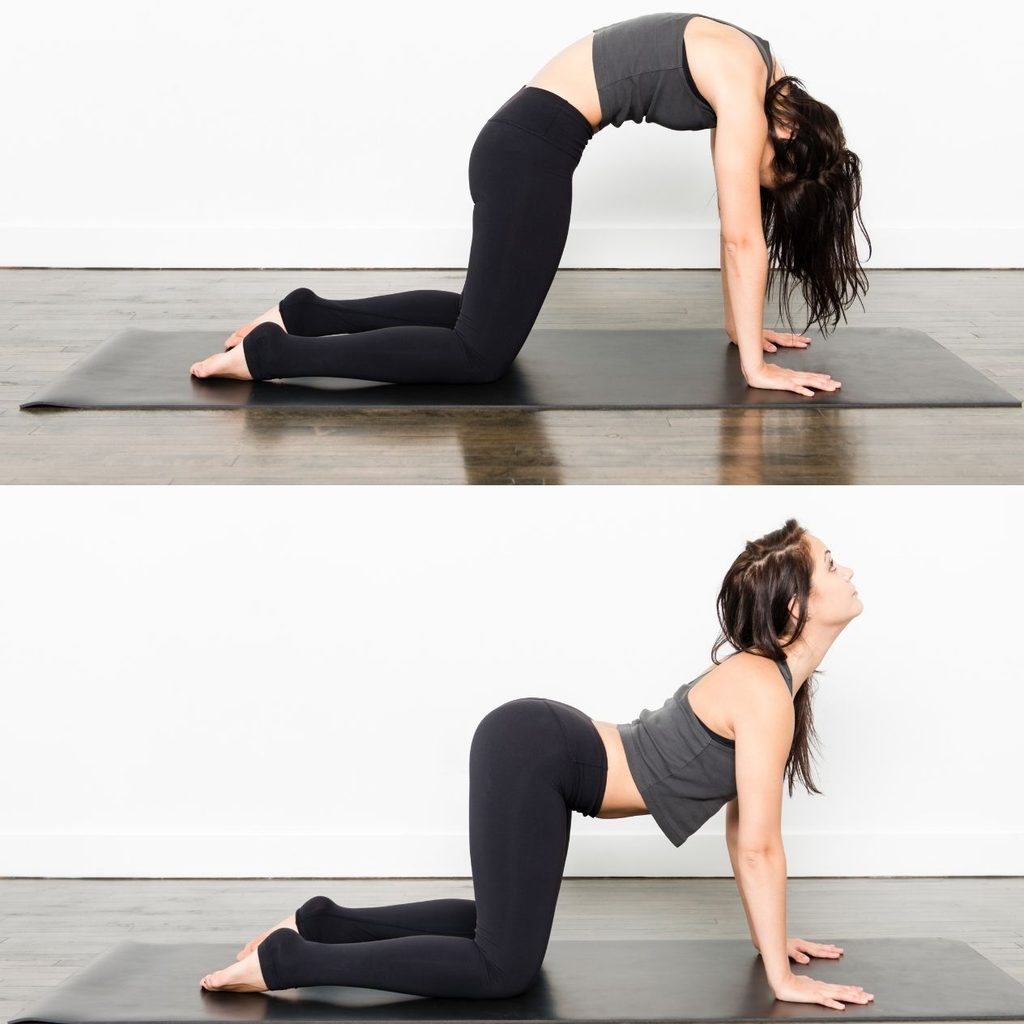
1. Cat-Cow Stretch
The cat-cow stretch moves your spine between rounding and gentle arching. It is a useful starting movement for improving upper and middle back mobility.
How to do it:
- Start on your hands and knees, with your wrists below your shoulders and knees below your hips.
- Inhale and gently lift your chest while allowing your back to arch.
- Exhale and round your spine towards the ceiling.
- Move slowly between both positions without forcing your neck.
- Repeat for 8–10 controlled repetitions.
2. Thread the Needle Stretch
If you experience tightness around your shoulder blades, this movement can help stretch the upper back and shoulders while gently rotating your thoracic spine.

How to do it:
- Start on your hands and knees.
- Slide your right arm underneath your left arm, reaching it across the floor.
- Allow your right shoulder and the side of your head to lower comfortably.
- Keep your hips relatively stable and avoid forcing the rotation.
- Hold for 20–30 seconds, then repeat on the other side.
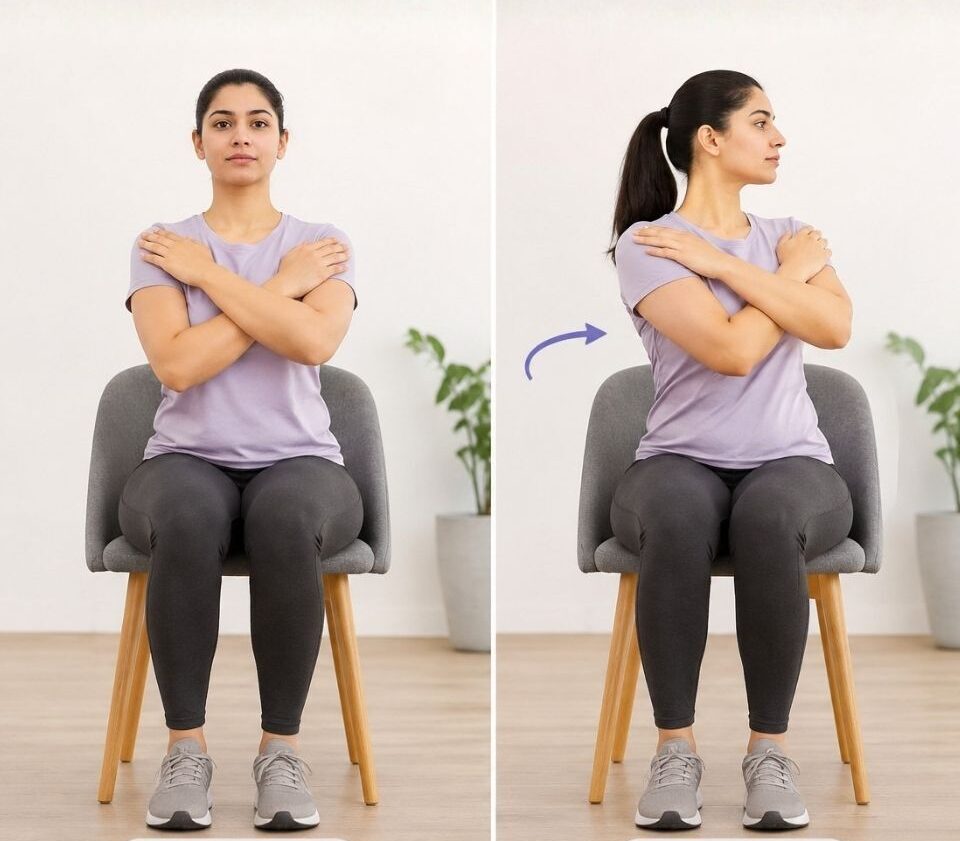
3. Seated Thoracic Rotation
Long periods of sitting can leave your upper and middle back feeling stiff. This exercise encourages controlled rotation through the thoracic spine.
How to do it:
- Sit upright on a stable chair with both feet flat on the floor.
- Cross your arms over your chest.
- Slowly rotate your upper body towards the right while keeping your hips facing forward.
- Return to the centre and rotate towards the left.
- Repeat 8–10 times on each side.
4. Child’s Pose with Side Reach
This variation of child’s pose targets the upper back and the muscles along the sides of your torso.

How to do it:
- Begin on your hands and knees.
- Move your hips back towards your heels and extend both arms forward.
- Walk both hands towards the right to feel a gentle stretch along your left side.
- Hold for 20–30 seconds.
- Return to the centre and repeat on the opposite side.
5. Clasped Hands Behind-the-Back Stretch
This stretch targets the chest, front shoulders, and upper-body muscles. It helps open the chest and improve shoulder flexibility, making it a useful addition to an upper-back mobility routine.

How to do it:
- Stand upright with your feet shoulder-width apart.
- Reach both hands behind your lower back.
- Clasp your fingers together, keeping your arms relaxed.
- Gently straighten your elbows and move your hands slightly away from your body.
- Lift your chest and hold the stretch for 20–30 seconds while breathing normally.
Tip: Keep your shoulders relaxed and avoid forcing your hands higher than is comfortable. If you cannot clasp your hands, hold a small towel between them.
6. Cross-Body Shoulder Stretch
This movement targets the back of your shoulder, which works alongside the upper-back muscles during reaching and pulling movements.

How to do it:
- Stand or sit with your back straight.
- Bring your right arm across your chest.
- Use your left hand to gently draw the right arm closer to your body.
- Keep your shoulders relaxed and avoid twisting your torso.
- Hold for 20–30 seconds and switch arms.
How to Relieve Upper Back Pain Between Shoulder Blades
Discomfort between the shoulder blades is a common reason people search for ways to relieve upper back pain fast. If the discomfort is related to mild muscle tightness or stiffness, gentle movement and regular position changes may help.
Try these simple steps:
- Take movement breaks: If you work at a desk, stand up and move around every 30–60 minutes.
- Change your sitting position: Keep your screen at a comfortable height and avoid staying in one fixed posture for too long.
- Move your shoulders: Perform gentle shoulder rolls and arm movements throughout the day.
- Use comfortable heat: A warm compress may help ease muscular stiffness for some people.
- Avoid aggressive stretching: Pulling hard on a painful area can make discomfort worse.
A quick upper back stretch routine can also be useful when you feel stiff after sitting or working. For a guided sequence, try the O’Coach Quick Upper Body Stretch plan.
Important: These steps are not a guaranteed way to relieve upper back pain immediately. If pain is severe, persistent, worsening, follows an injury, or occurs with chest pain, breathing difficulty, weakness, numbness, fever, or other concerning symptoms, seek medical advice promptly.
Upper Back Strengthening Exercises for Better Support
Stretching is only one part of maintaining upper-back mobility. Strengthening the muscles around your shoulder blades and upper back can also support everyday movement and posture.
Here are three exercises to consider:
1. Scapular Retractions
This exercise targets the muscles that help draw your shoulder blades together.
How to do it:
- Stand or sit upright with your arms relaxed by your sides.
- Gently draw your shoulder blades towards each other.
- Avoid shrugging your shoulders or arching your lower back.
- Hold for 3–5 seconds.
- Relax and repeat 10–12 times.
2. Wall Angels
Wall angels encourage controlled shoulder movement and engage muscles around your upper back.
How to do it:
- Stand with your back against a wall.
- Position your arms in a goalpost shape, with elbows bent.
- Slowly slide your arms upwards as far as comfortable.
- Bring them back down without forcing your shoulders.
- Repeat 8–10 times.
3. Resistance Band Rows
Rows strengthen the upper-back muscles, including the rhomboids and middle trapezius.
How to do it:
- Sit or stand with a resistance band held in both hands.
- Keep your arms extended in front of you.
- Pull your elbows backwards while bringing your shoulder blades together.
- Pause briefly and return slowly to the starting position.
- Perform 10–12 repetitions.
Start with light resistance and controlled movements. If an exercise increases your pain, stop and consider getting guidance from a qualified physiotherapist.
A Simple Daily Upper Back Stretch Routine
You can combine these movements into a short daily routine when your upper back feels stiff:
- Cat-Cow Stretch: 8–10 repetitions.
- Thread the Needle: Hold for 20 seconds on each side.
- Seated Thoracic Rotation: 8 repetitions on each side.
- Child’s Pose with Side Reach: Hold for 20 seconds on each side.
- Doorway Chest Stretch: Hold for 20–30 seconds.
- Cross-Body Shoulder Stretch: Hold for 20 seconds on each arm.
Start with one round and adjust the routine based on your comfort and mobility. You do not need to stretch aggressively or push through pain to make progress.
Tips to Prevent Upper Back Tightness During the Day
Your daily habits can influence how your upper back feels. Along with stretching exercises, a few practical changes can help you manage stiffness.
- Adjust your workstation: Position your monitor around eye level and keep frequently used items within easy reach.
- Avoid staying in one position: Change positions regularly instead of trying to maintain a rigid posture all day.
- Keep moving: Include walking and regular physical activity in your daily routine.
- Strengthen your upper back: Include suitable pulling and shoulder-blade exercises in your workouts.
- Pay attention to exercise technique: Use controlled movements when training your back and shoulders.
- Make stretching consistent: Short, comfortable sessions can be easier to maintain than occasional long stretching sessions.
Final Thoughts
Upper-back tightness can make sitting, reaching, and everyday activities uncomfortable. A consistent combination of upper back stretches, mobility exercises, and strengthening movements can help you work towards better movement and flexibility.
Start with a few exercises, keep your movements controlled, and gradually build a routine that fits your day. For more guided workouts and mobility routines, download the O’Coach app and explore exercises you can include in your fitness routine.
Upper Back Stretches to Relieve Pain and Improve Mobility