A proper pull up warm up routine prepares your shoulders, back, and arms for the demands of pull-ups. Spending 5–8 minutes on controlled movements can help you practise shoulder control and transition into your workout gradually. Here are seven exercises you can do before your next pull day, including options for beginners training at home.
Why Is a Warm-Up Important Before Pull-Ups?
Pull-ups involve several upper-body muscles, including the lats, biceps, forearms, and muscles that control your shoulder blades. Preparing these areas before training helps you practise the movement patterns needed for controlled pulling.
A suitable warm-up can help you:
- Gradually increase your activity level before challenging sets.
- Practise controlled shoulder and arm movements.
- Prepare your upper body for pulling exercises.
- Identify movements that feel uncomfortable before increasing the intensity.
A warm-up does not guarantee injury prevention, but it is a useful part of a well-structured workout.
Pull-Up Warm-Up Routine: 7 Exercises to Try
Complete your workout with the O’Coach Pull Day Cool-Down Routine to finish your session with gentle movements and stretches.
1. Arm Circles
Arm circles gently move your shoulders through a comfortable range of motion and provide a simple starting point for your upper-body warm-up.
How to do it:
- Stand upright with your feet shoulder-width apart.
- Extend your arms out to your sides.
- Make small circles with both arms.
- Gradually increase the circle size if comfortable.
- Reverse the direction.
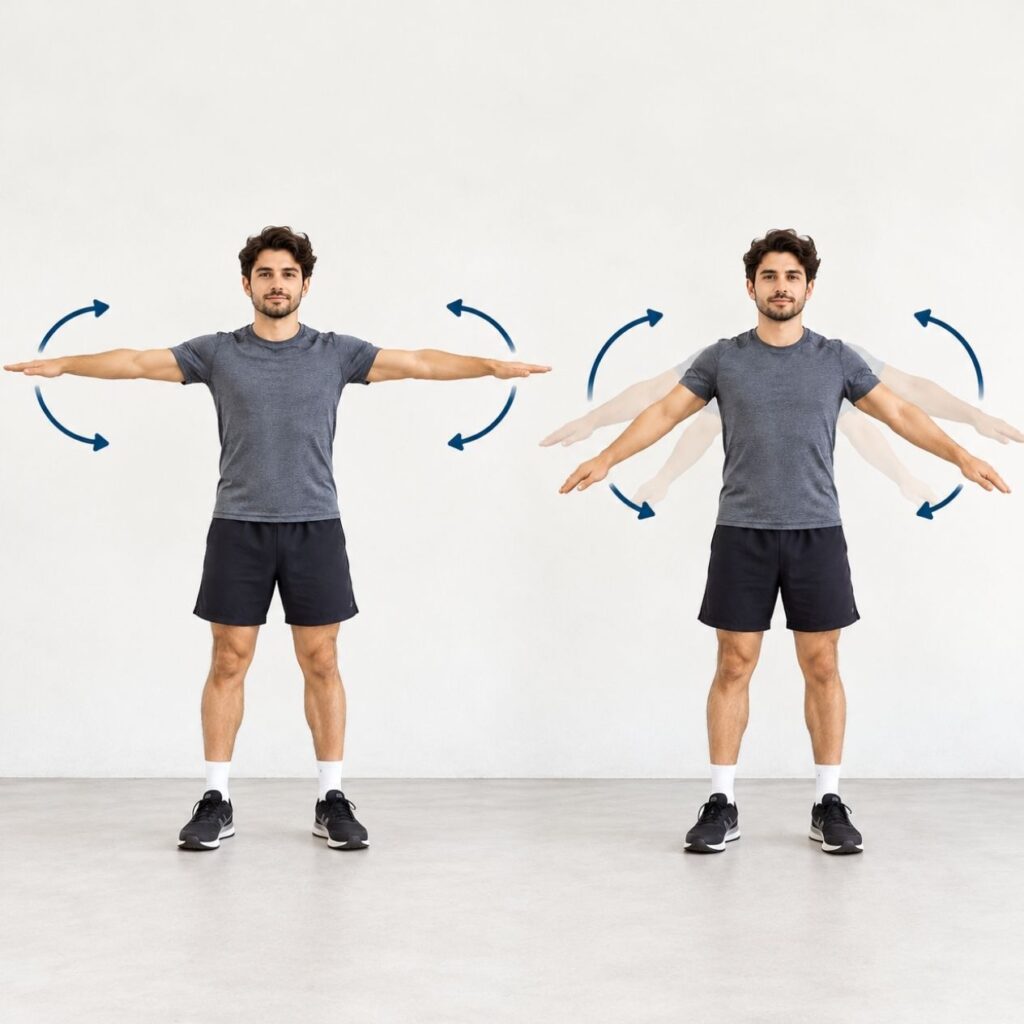
Duration 20–30 seconds in each direction.
Tip: Keep your arms relaxed and avoid swinging them aggressively.
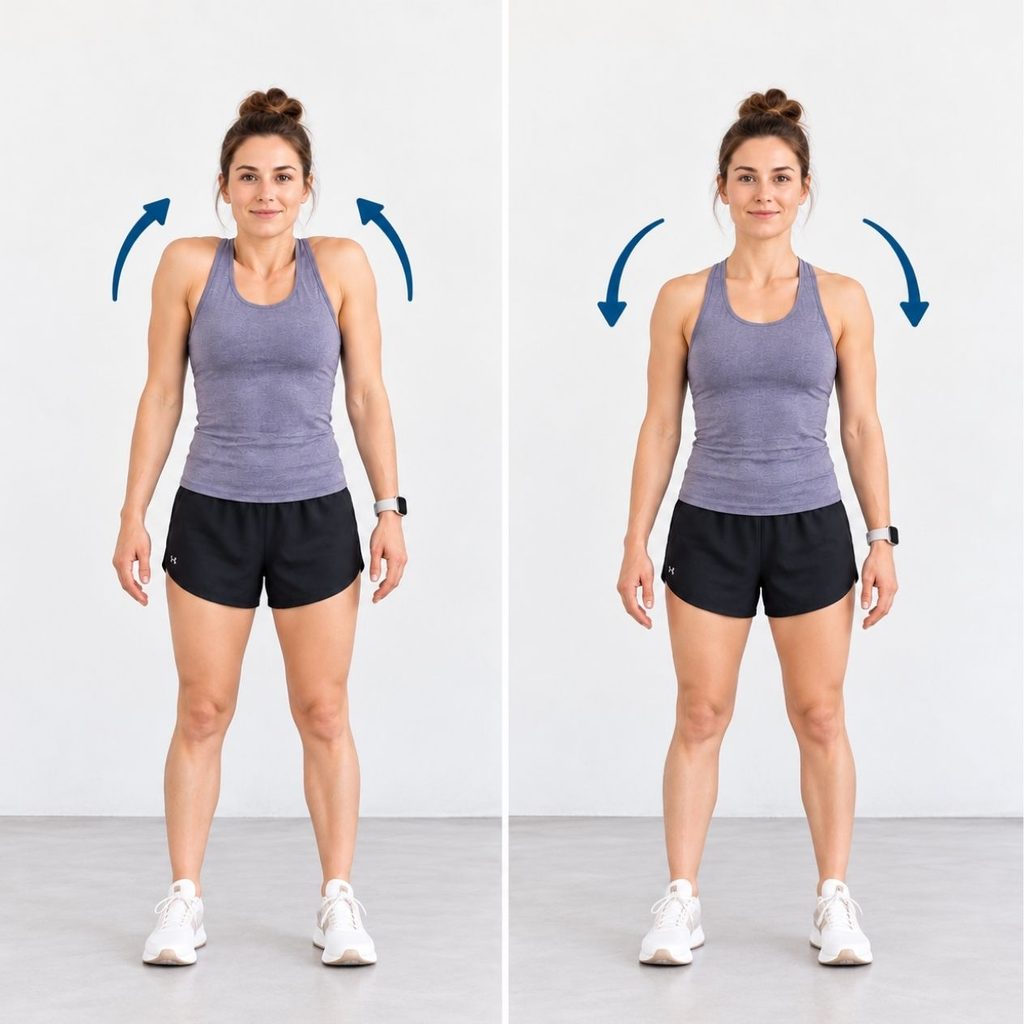
2. Shoulder Rolls
Shoulder rolls encourage gentle shoulder movement before you begin hanging or pulling exercises.
How to do it:
- Stand tall with your arms relaxed.
- Lift your shoulders gently toward your ears.
- Roll them backward and down.
- Repeat in a smooth, controlled motion.
Repetitions: 10 forward and 10 backward.
Tip: Avoid forcing your shoulders into an exaggerated range of motion.
3. Standing Torso Rotations
Controlled torso rotations introduce movement through your upper body and help you prepare for a workout involving several pulling exercises. Ready for your next pull workout? Follow the O’Coach Pull Day Warm-Up to prepare your upper body before training.
How to do it:
- Stand with your feet shoulder-width apart.
- Bend your elbows and keep your hands near your chest.
- Rotate your upper body gently to one side.
- Return to the centre and rotate to the other side.
- Keep your hips relatively stable.
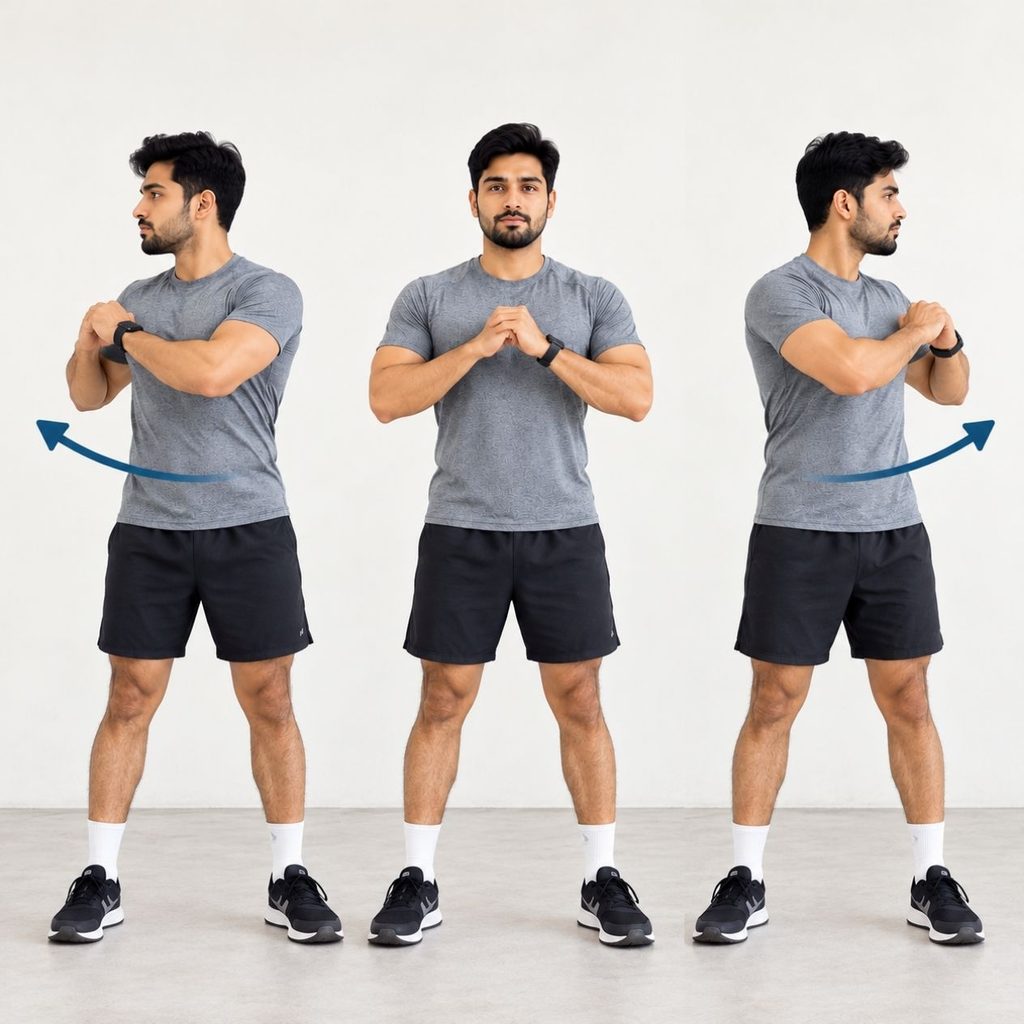
Repetitions: 8–10 per side.
Tip: Move smoothly without jerking or forcing your lower back.
4. Wall Slides
Wall slides help you practise controlled overhead shoulder movement. They are especially useful if you want to work on comfortable arm movement before reaching for a pull-up bar.
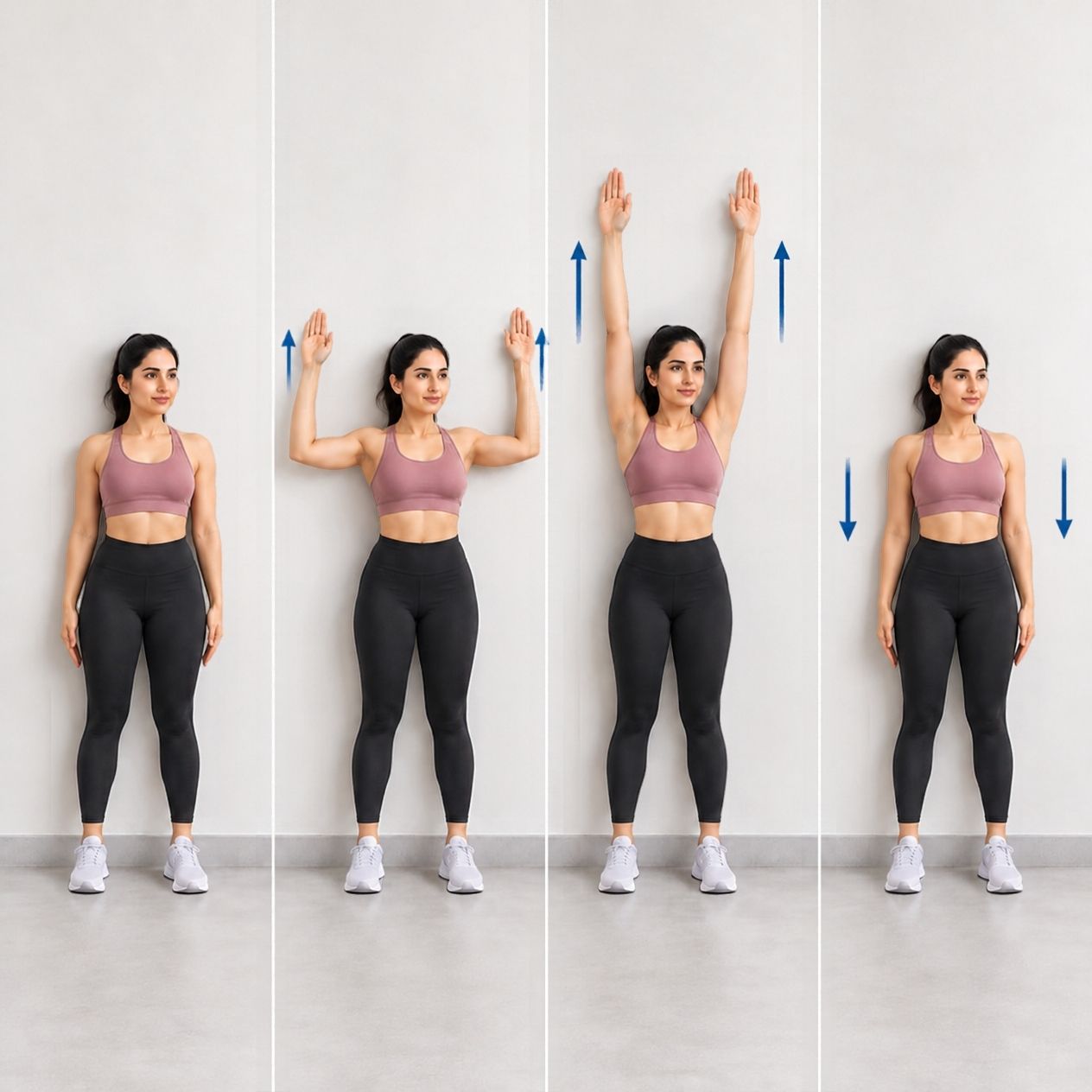
How to do it:
- Stand with your back near a wall.
- Raise your arms into a comfortable goalpost position.
- Slowly slide your arms upward.
- Return to the starting position.
- Repeat without forcing your shoulders or arching your lower back.
Repetitions: 8–10.
Beginner modification: Use a smaller range of motion if reaching overhead feels restricted.
5. Scapular Push-Ups
Scapular push-ups train you to move your shoulder blades while keeping your elbows straight. This helps you practise shoulder control before more demanding upper-body movements.
How to do it:
- Begin in a high plank with your hands beneath your shoulders.
- Keep your elbows straight.
- Allow your chest to move slightly toward the floor as your shoulder blades come closer together.
- Push the floor away so your upper back moves slightly upward.
- Repeat slowly.
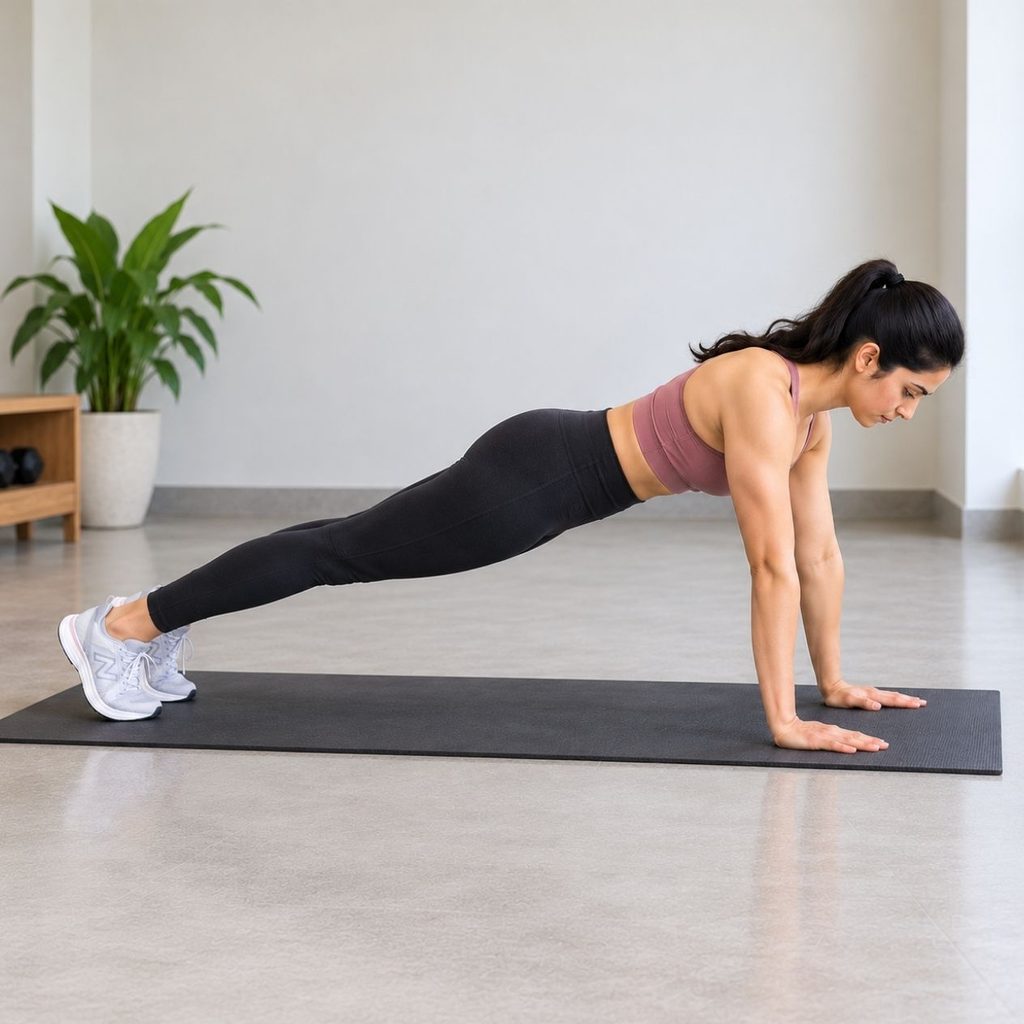
Repetitions: 8–12.
Beginner modification: Perform the exercise against a wall or with your hands on a sturdy elevated surface.
Tip: Keep the movement small and controlled. Stop if it causes shoulder or wrist pain.
6. Resistance Band Pull-Aparts
Resistance band pull-aparts are a useful addition to your pull day dynamic warm up. They encourage controlled upper-back movement without requiring you to lift your body weight.
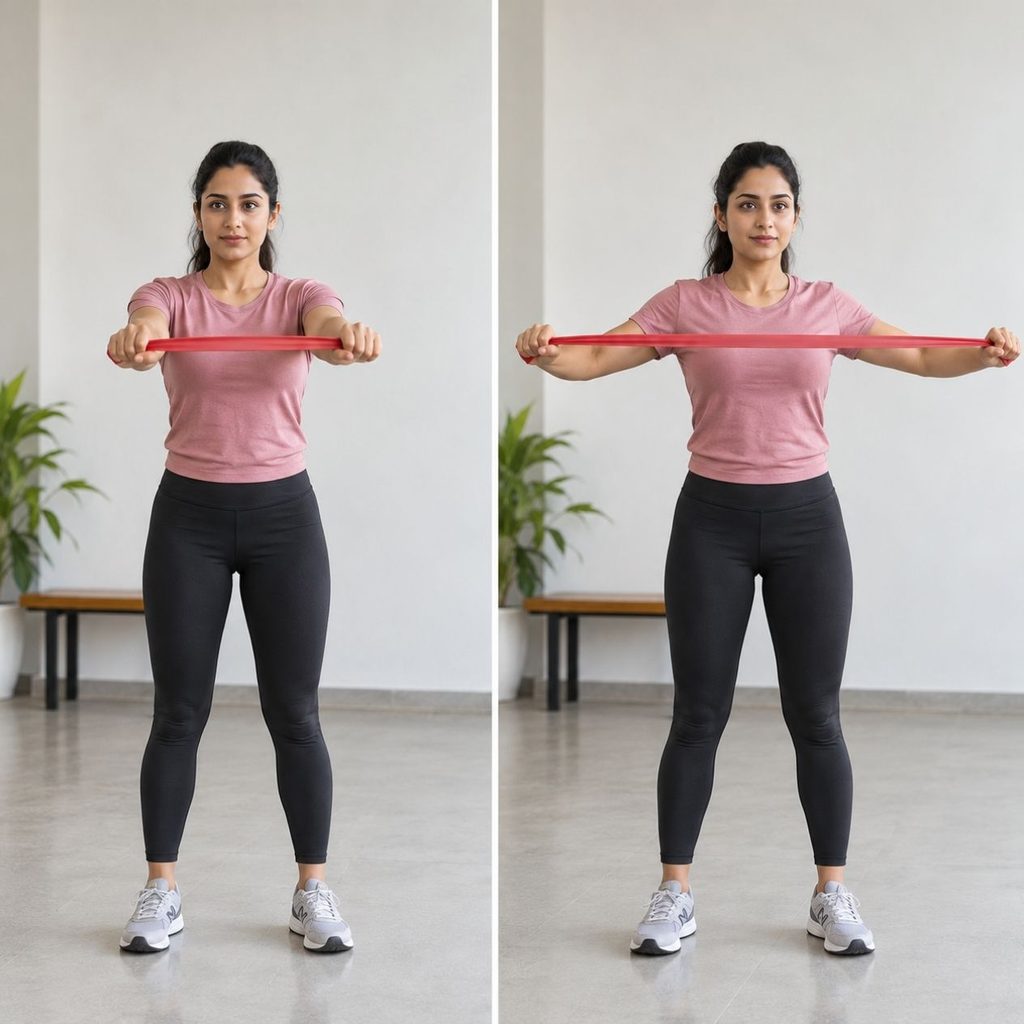
How to do it:
- Hold a light resistance band in front of your chest.
- Keep your arms extended with your elbows slightly relaxed.
- Pull your hands apart until the band approaches your chest.
- Pause briefly.
- Return to the starting position slowly.
Repetitions: 10–15.
No resistance band? Replace this exercise with 10 gentle shoulder-blade squeezes while standing.
Tip: Use light resistance. Your warm-up should not tire your upper back before the main workout.
7. Scapular Pull-Ups
Scapular pull-ups are the most specific movement in this pull up warm up routine because they let you practise shoulder-blade movement while holding a pull-up bar. Want more workout guidance? Download the O’Coach app and explore exercise routines to support your fitness journey.
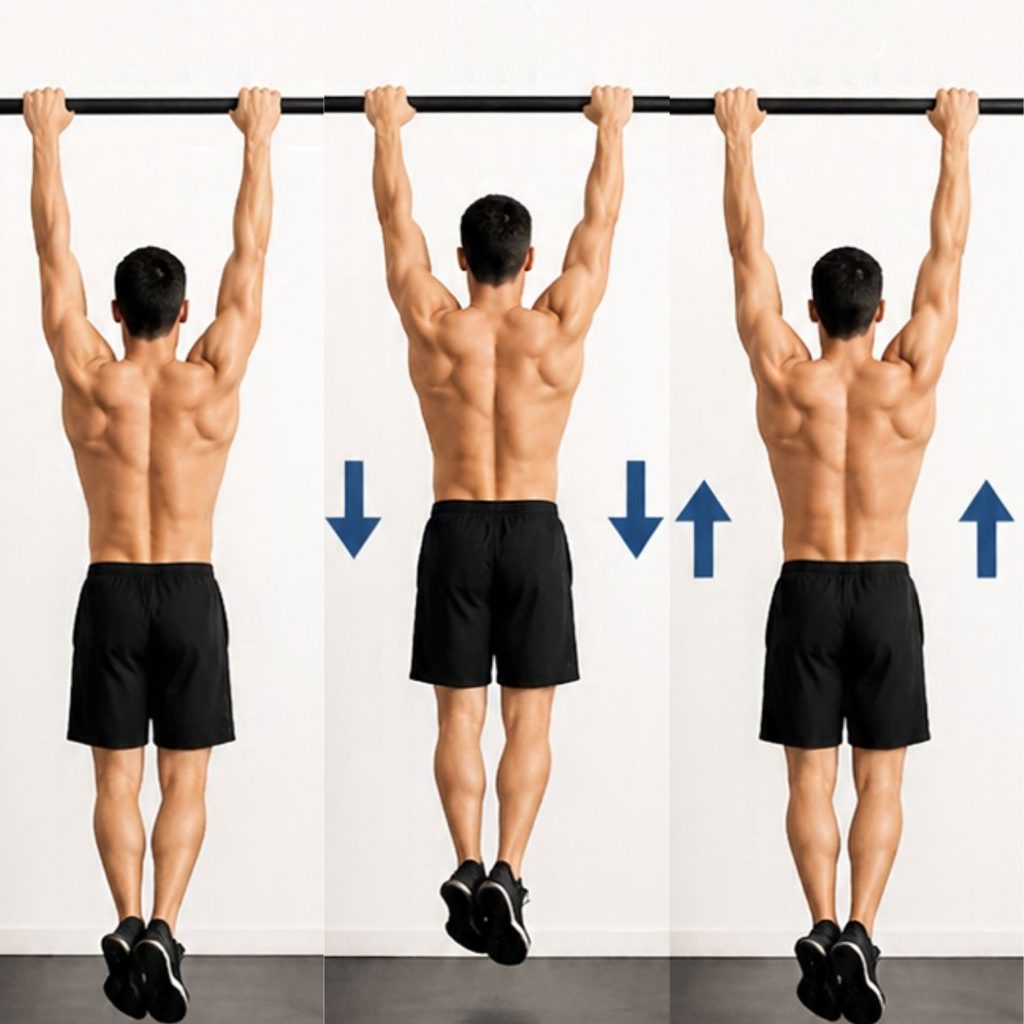
How to do it:
- Grip a secure pull-up bar with your hands approximately shoulder-width apart.
- Begin in a comfortable hanging position.
- Without bending your elbows, gently move your shoulder blades down so your body rises slightly.
- Pause briefly.
- Return to the starting position with control.
Beginner modification: If hanging is too difficult, practise shoulder-blade movements using a resistance band or a supported position.
Safety tip: Use a bar that can safely support your weight. Skip hanging exercises if they cause pain or discomfort.
A Simple Pull-Up Warm-Up Routine at Home
You can complete this routine in approximately 5–8 minutes. Adjust the duration according to your comfort and experience.
| Exercise | Duration or repetitions |
|---|---|
| Arm circles | 20–30 seconds in each direction |
| Shoulder rolls | 10 forward and 10 backward |
| Standing torso rotations | 8–10 per side |
| Wall slides | 8–10 repetitions |
| Scapular push-ups | 8–12 repetitions |
| Resistance band pull-aparts | 10–15 repetitions |
| Scapular pull-ups | 5–8 repetitions |
If you do not have a resistance band or pull-up bar, you can still complete the first five exercises. Save bar-specific practice for when you have access to secure equipment.
How to progress: Start with easy movements and a comfortable range of motion. Gradually add supported or assisted pull-ups as your strength improves.
Common Pull-Up Warm-Up Mistakes to Avoid
- Skipping warm-ups: Start with a few minutes of gentle movement before pull-ups.
- Overstretching: Keep your dynamic stretching for pull day controlled and comfortable.
- Moving too quickly: Perform pull day stretches smoothly without forcing your shoulders.
- Starting with full pull-ups: Beginners should try supported variations first.
- Ignoring pain: Stop any movement that causes discomfort.
Tip: A good pull up warm up routine prepares your shoulders and back without tiring you before your workout.
Frequently Asked Questions
How do you warm up for pull-ups?
Start with 5–8 minutes of gentle movement, such as arm circles, shoulder rolls, torso rotations, and shoulder-blade exercises. If appropriate, finish with a few controlled scapular pull-ups before your working sets.
What is the best warm-up for pull-ups?
There is no single best routine for everyone. A useful warm-up combines general upper-body movement with exercises that prepare your shoulders and back for pulling. Choose movements based on your experience, mobility, and workout intensity.
Can I do a pull-up warm-up routine at home?
Yes. Arm circles, shoulder rolls, torso rotations, wall slides, and scapular push-ups can be performed at home without a pull-up bar. Hanging exercises require a secure bar, while resistance band pull-aparts require a suitable band.


Pull Day Warm Up Routine: 7 Exercises to Prepare for Pull-Ups