
Have you ever looked around your home and wondered if everyday spaces are as safe for your parents as they used to be?
- A loose rug near the sofa
- A dark staircase at night
- A bathroom floor that gets slippery after a shower
Even a familiar home can have hidden safety risks for older adults as changes in balance, vision, and mobility make everyday movement more challenging.
The good news is that small, practical changes can reduce fall risks and make daily movement safer without major renovations. Here are eight simple ways to help your parents move around with greater confidence.
Explore the O’Coach Seniors Workout Plan for simple, guided exercises.
Here are 8 practical changes to start with.
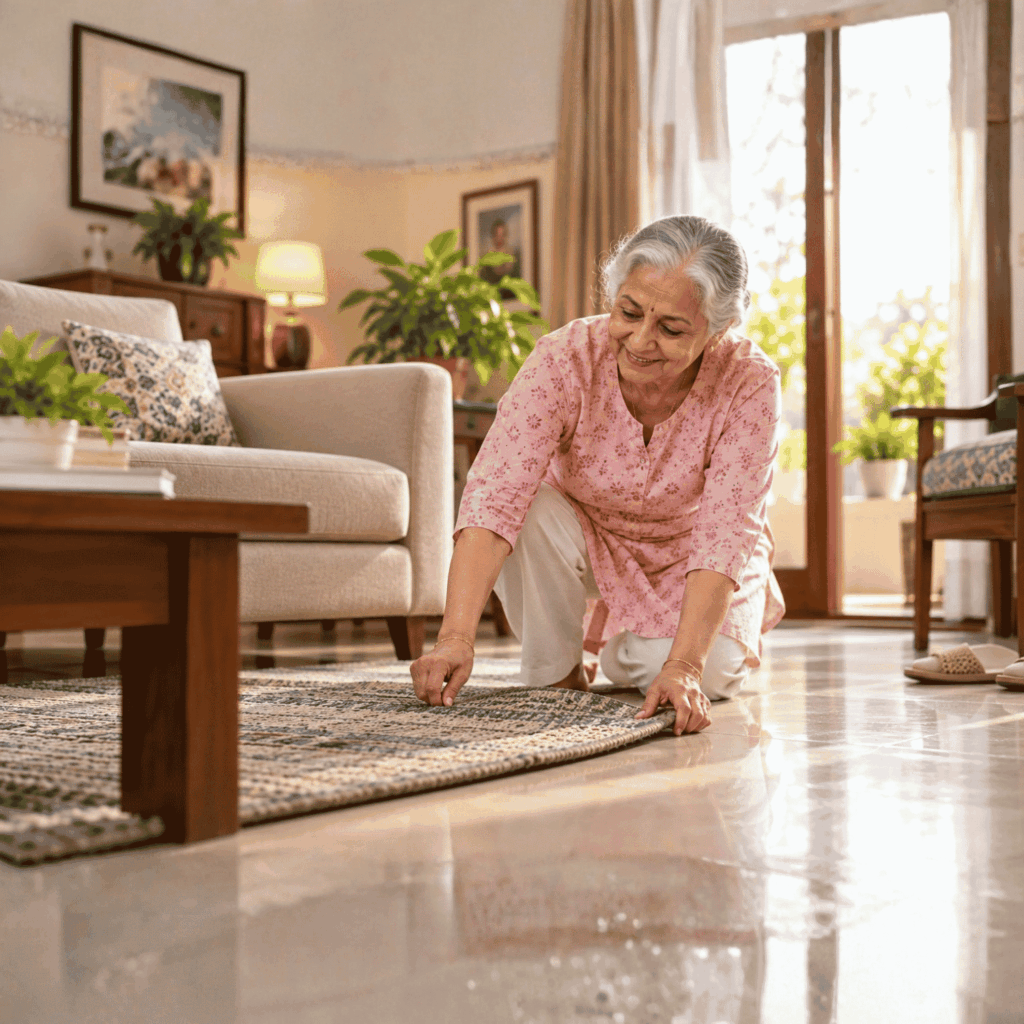
1. Remove Loose Rugs and Clutter
Loose rugs, mats, shoes, bags, and other objects can get in the way of walking.
Keep frequently used pathways clear, especially between the bedroom, bathroom, kitchen, and living room. If you use rugs, make sure they are secure and do not curl at the edges.
2. Improve Lighting Where It Matters
A poorly lit hallway or staircase can make it difficult to see steps and obstacles.
Keep stairs, hallways, entrances, and bathrooms well lit. A bedside light that is easy to reach can also help when getting up at night.
3. Make the Bathroom Less Slippery
The bathroom deserves extra attention because water can make surfaces slippery.
Use non-slip surfaces or secure bathroom mats, and keep frequently used items within easy reach. Stable handholds can also provide additional support where appropriate.
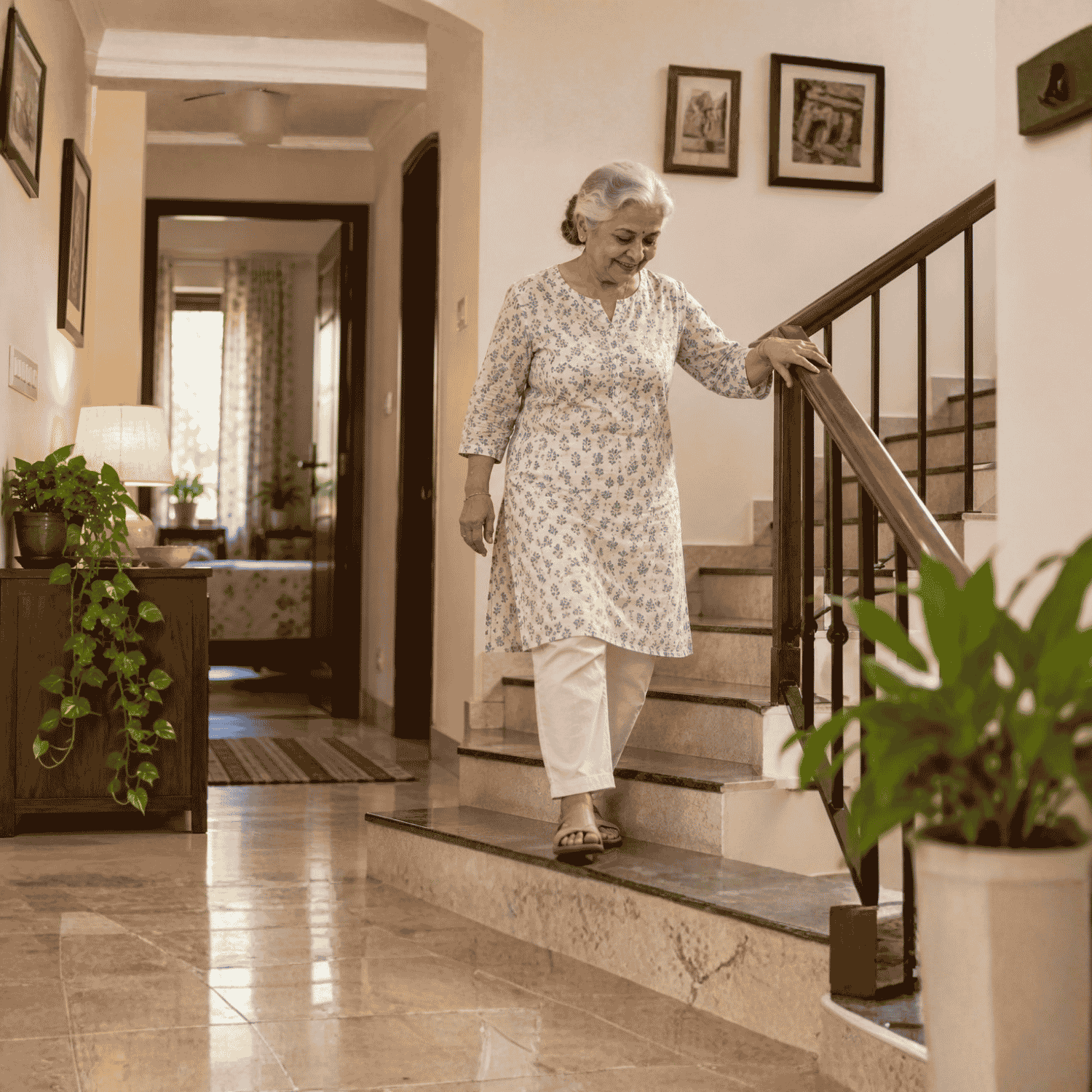
4. Make Stairs Easier to Navigate
Stairs can become more challenging when balance or leg strength changes.
Keep the steps clear, make sure they are well lit, and check that handrails are secure. Avoid leaving anything on the stairs, even temporarily. Safer stairs are important, but leg strength also plays a role in everyday mobility. Explore O’Coach’s Leg Strengthening Exercises for Seniors for guided exercises designed for older adults.
5. Keep Everyday Items Within Reach
Reaching for something on a high shelf or bending repeatedly for items on the floor can make everyday tasks unnecessarily difficult.
Place frequently used kitchen supplies, clothing, toiletries, and other essentials somewhere they can be reached comfortably.
And avoid using unstable stools or chairs to reach high places.
6. Keep Wires Away From Walking Areas
Charging cables and electrical wires can easily become obstacles.
Keep wires along walls or away from regular walking paths. Pay particular attention to areas your parent uses frequently throughout the day.
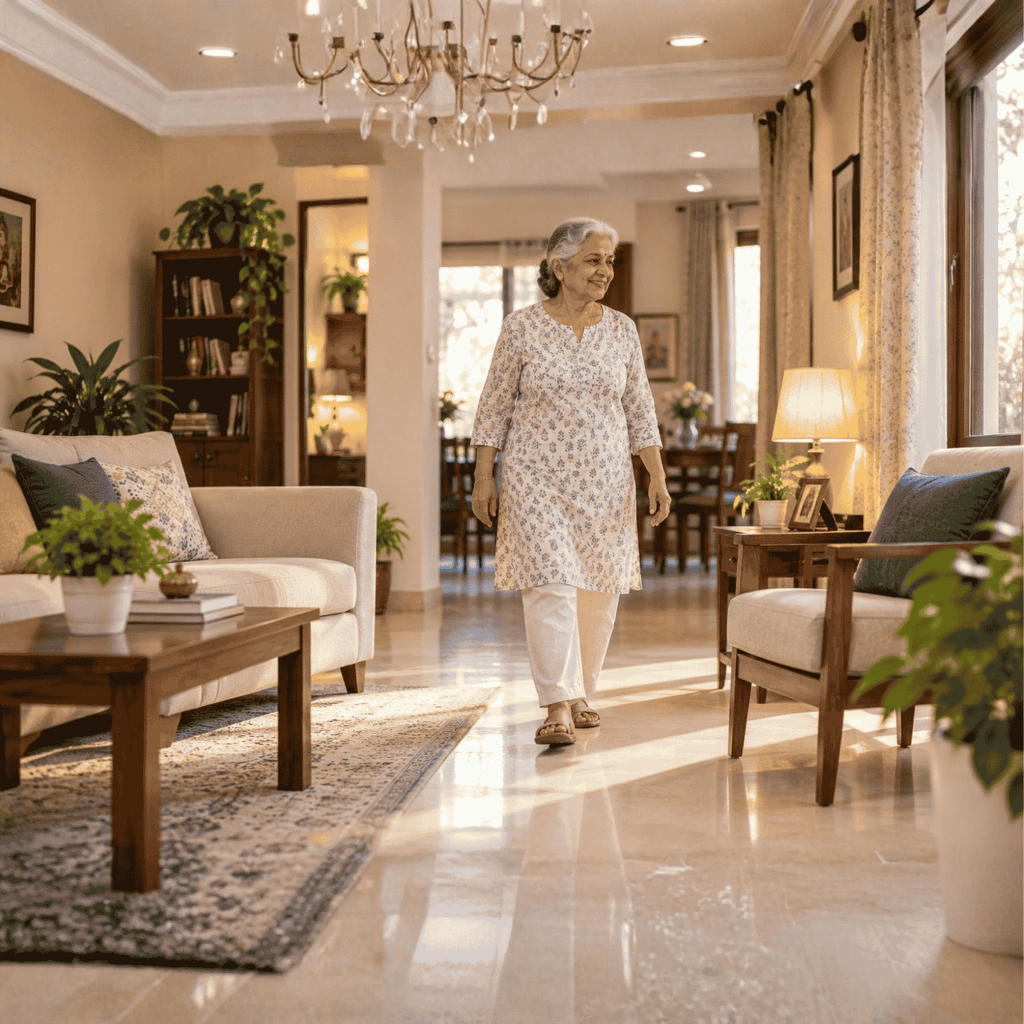
7. Create Clear Paths Around Furniture
A room does not need to be empty to be safe. It simply needs enough clear space to move around comfortably.
Rearrange furniture if chairs, tables, or decorative items are blocking commonly used paths. Stable chairs that are easy to sit down on and get up from can also be more practical than very low seating. Making space to move is one step towards safer daily activities.
8. Choose Safer Everyday Footwear
Loose or slippery slippers can make walking less secure, especially on smooth floors.
Encourage secure footwear that fits properly and stays firmly on the feet. This small change can make everyday movement around the home more comfortable.
5-Minute Home Safety Check
- Are walking paths clear?
- Are stairs and hallways well lit?
- Are rugs and mats secure?
- Can frequently used items be reached comfortably?
- Are bathroom surfaces and floors safe?
- Are wires kept away from walking areas?
- Can the person easily get in and out of their main chair?
A Safer Home Is Only One Part of Staying Independent
A safer home can make everyday movement more manageable, from walking between rooms to getting up from a chair. Combine practical home adjustments with suitable movement and strength exercises to support your parent’s daily mobility.
Looking for guided exercises for older adults? Download the O’Coach app and explore the Seniors Workout Plan to find simple exercise routines that can complement a more active daily lifestyle.


8 Simple Home Safety Tips to Keep Older Adults Safe