Who says getting older means slowing down? A little movement today can make everyday life easier tomorrow! The best exercises for seniors at home can help older adults build strength, improve balance, and stay independent. With a simple exercise plan for seniors, you can start small, move at your own pace, and stay active without a gym.
You can also explore the O’Coach Seniors Workout Plan and get started at home with guided exercises.
Why Is Regular Exercise Important for Seniors?
As people age, muscle strength, flexibility, and balance may gradually change. Regular exercise can help maintain these abilities and support everyday movement.
A suitable exercise program for seniors should focus on four key areas:
- Strength: Helps with standing up, climbing stairs, and carrying everyday items.
- Balance: Helps practise stability during walking and other daily activities.
- Flexibility: Supports comfortable movement through the joints.
- Aerobic fitness: Activities such as walking support cardiovascular health and endurance.
The goal of elderly fitness is not to perform difficult workouts. It is to stay active in a way that supports comfort, confidence, and independence.
What Are the Best Exercises for Seniors at Home?
1. Chair Sit-to-Stands
Chair sit-to-stands strengthen the legs and practise a movement used frequently throughout the day.
How to do it:
- Sit on a sturdy chair with your feet flat on the floor.
- Position your feet approximately hip-width apart.
- Lean forward slightly and push through your feet to stand up.
- Slowly lower yourself back into the chair.
- Repeat at a comfortable pace.
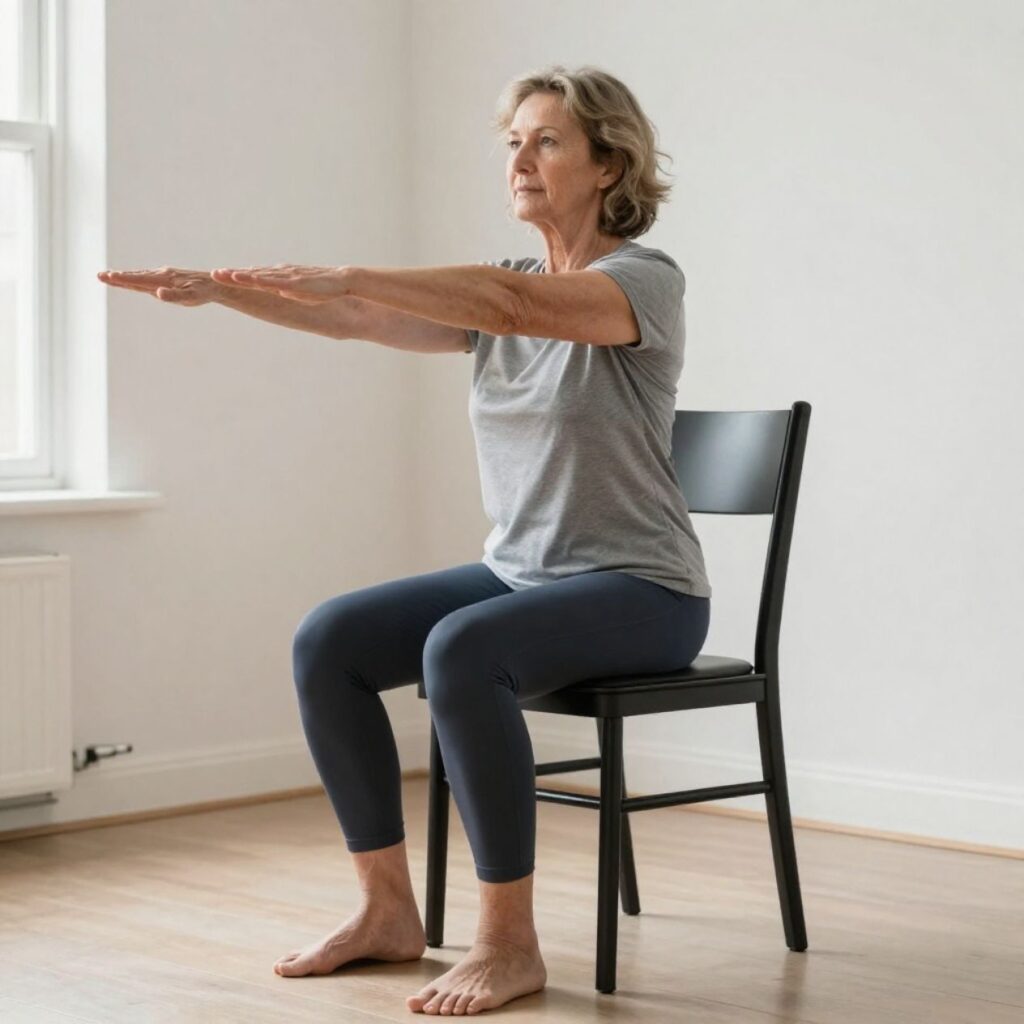
Beginner target: 5–8 repetitions
Use your hands for assistance if needed. If standing without support is difficult, seek advice from a healthcare professional or physiotherapist before practising independently.
2. Wall Push-Ups
Wall push-ups strengthen the chest, shoulders, and arms without requiring the person to get down onto the floor.
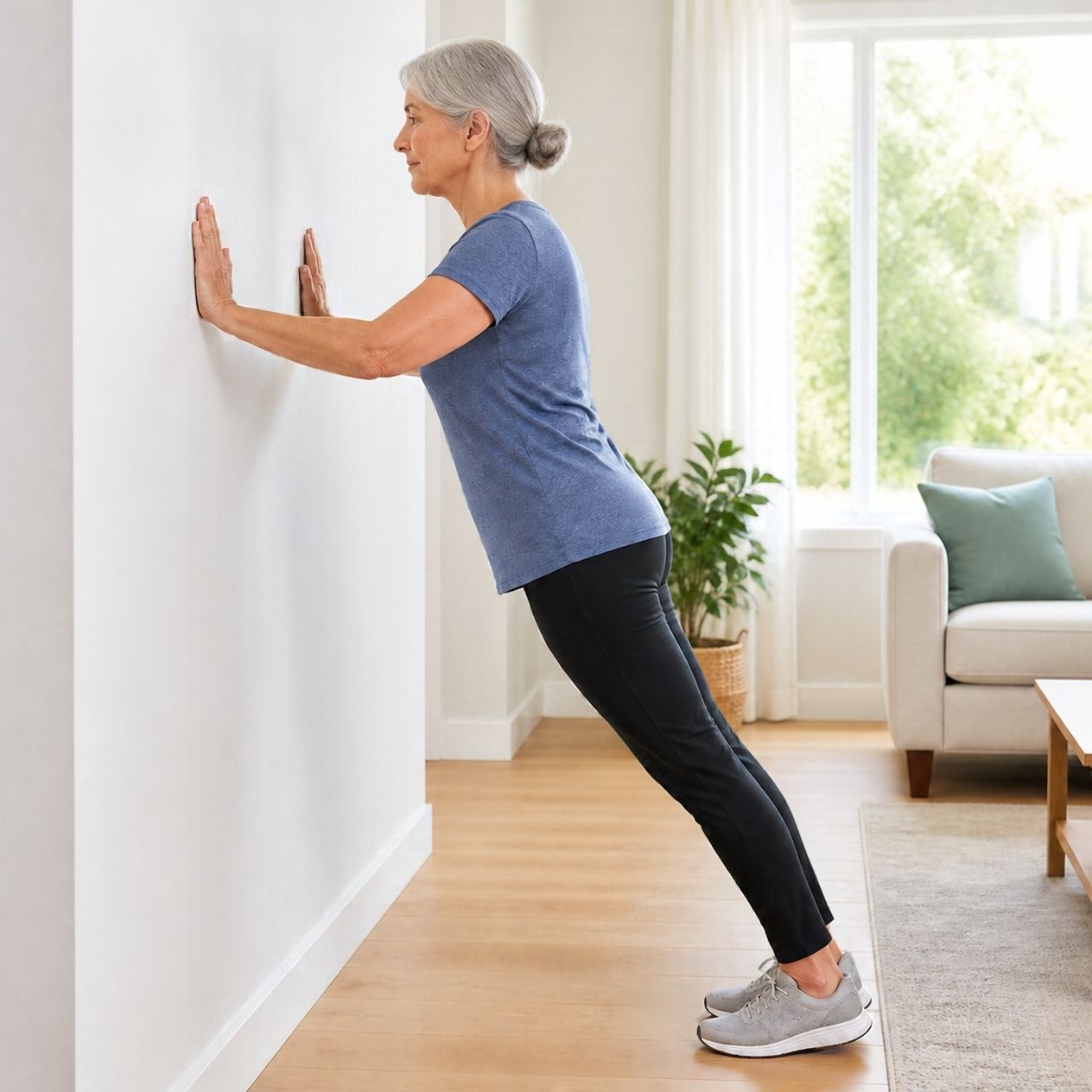
How to do it:
- Stand facing a wall at a comfortable distance.
- Place your palms against the wall at approximately shoulder height.
- Bend your elbows and bring your chest gently towards the wall.
- Push through your hands to return to the starting position.
- Keep your body straight and move slowly.
Beginner target: 5–10 repetitions
3. Seated Knee Extensions
Seated knee extensions help strengthen the muscles at the front of the thighs and are useful for people who need a low-impact exercise option.
How to do it:
- Sit upright in a sturdy chair with both feet on the floor.
- Slowly straighten one knee until the leg is comfortably extended.
- Hold for one or two seconds.
- Lower the foot gently to the floor.
- Repeat with the other leg.
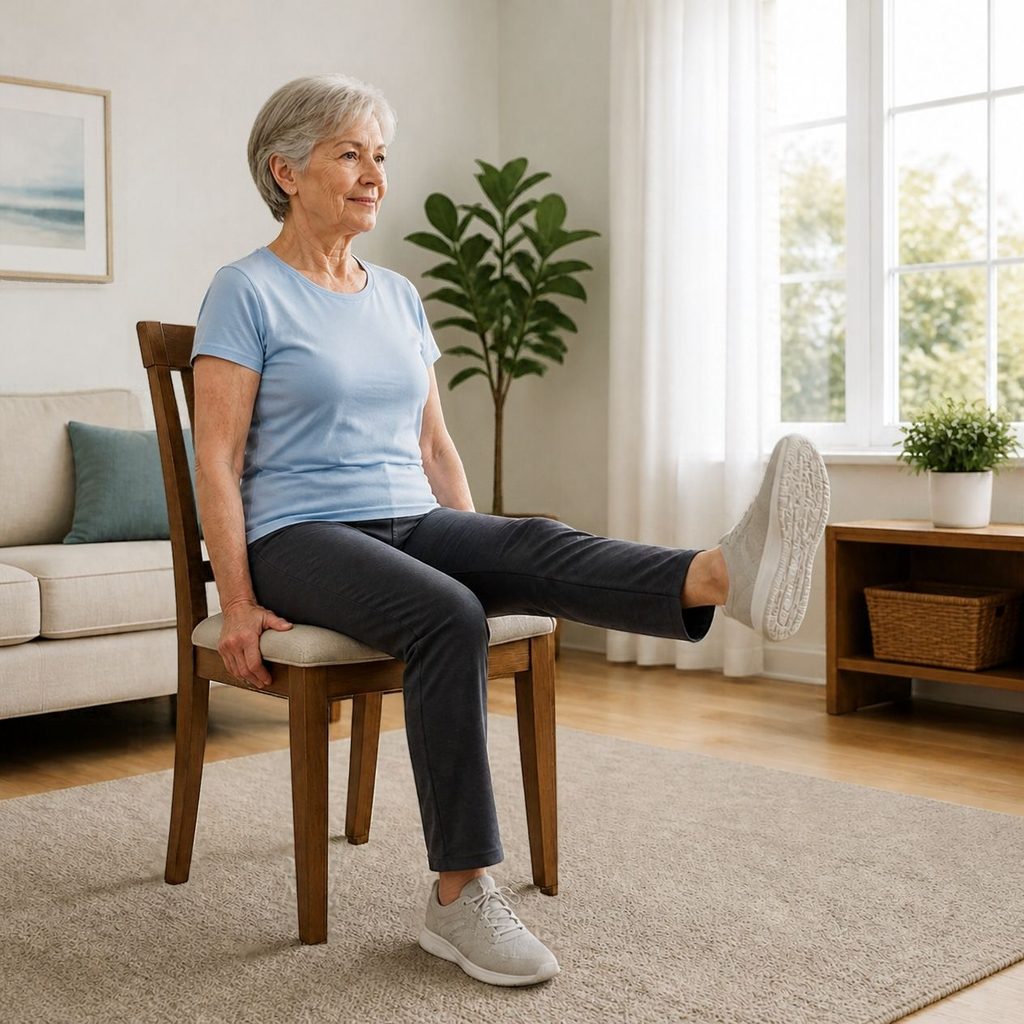
Beginner target: 8 repetitions per leg
4. Supported Heel Raises
Heel raises strengthen the calf muscles, which contribute to walking and standing.
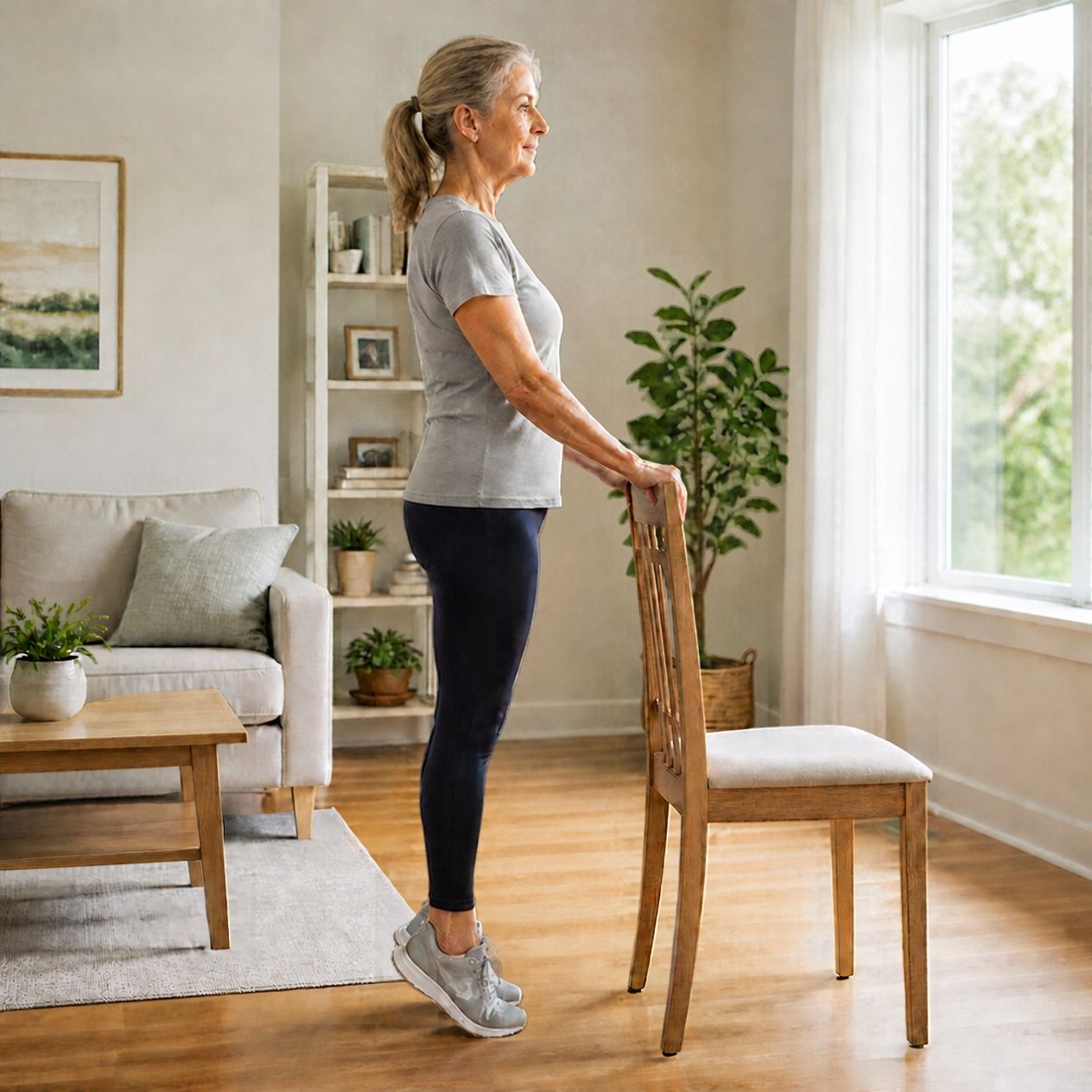
How to do it:
- Stand behind a sturdy chair or hold a stable countertop.
- Keep your feet approximately hip-width apart.
- Slowly lift both heels off the floor.
- Pause briefly at the top.
- Lower your heels with control.
Beginner target: 8–10 repetitions
Do not perform this exercise without appropriate support if you feel unsteady while standing.
5. Supported Side Leg Raises
Side leg raises work the muscles around the hips, which help support stability during walking and other everyday movements.
How to do it:
- Stand upright while holding a sturdy chair.
- Keep your back straight and your supporting knee slightly relaxed.
- Move one leg slowly out to the side without leaning your body.
- Return the leg to the starting position.
- Repeat on the other side.
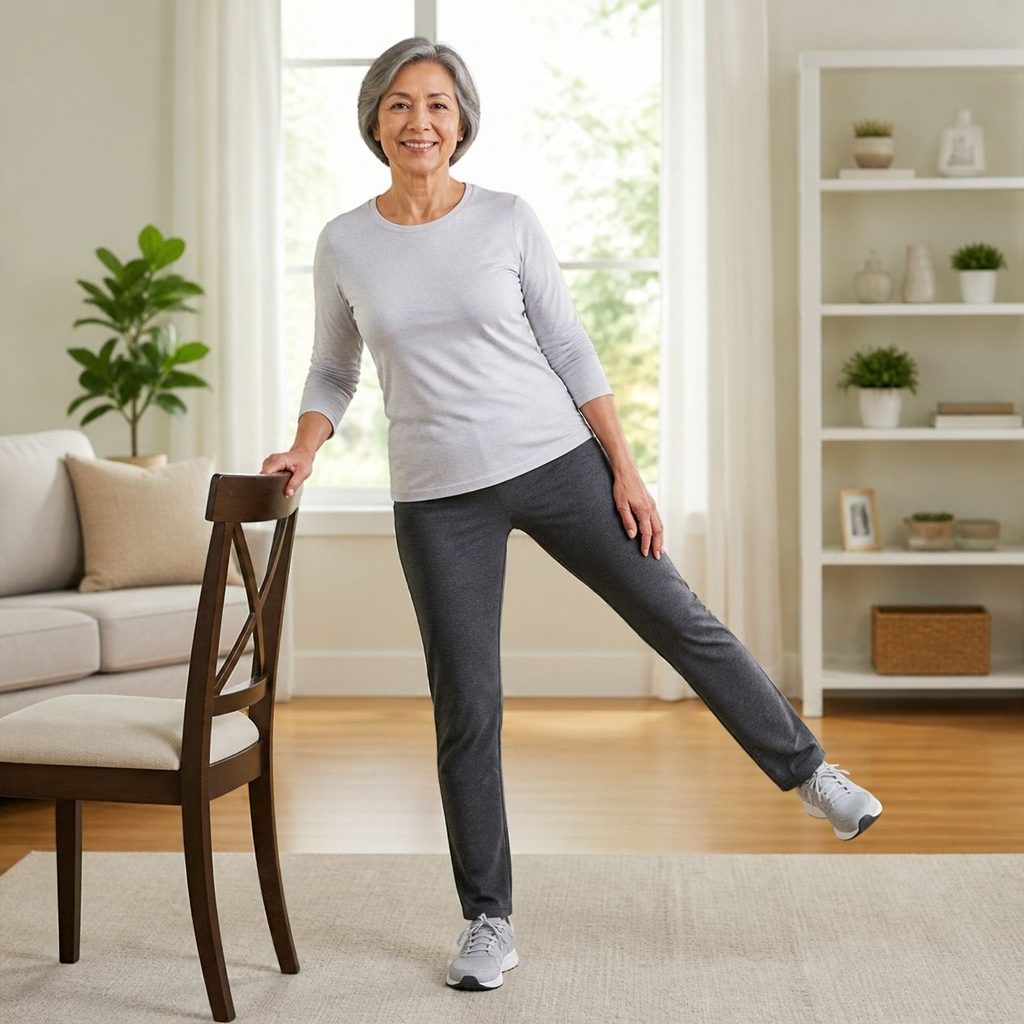
Beginner target: 6–8 repetitions per leg
A Simple Weekly Exercise Plan for Seniors at Home
A structured schedule helps seniors build a consistent exercise habit. This simple routine combines strength, balance, walking, and flexibility.
Monday : Strength and Mobility
- Chair sit-to-stands: 5–8 repetitions
- Wall push-ups: 5–10 repetitions
- Seated knee extensions: 8 per leg
- Shoulder rolls: 1 minute
Tuesday : Walking and Balance
- Comfortable walking: 5–10 minutes
- Supported heel raises: 8 repetitions
- Gentle supported weight shifts
Wednesday : Gentle Movement
- Seated marching: 1–2 minutes
- Ankle circles: 10 per side
- Gentle shoulder and upper-back movements
- Optional easy walk
Thursday : Strength and Stability
- Chair sit-to-stands: 5–8 repetitions
- Wall push-ups: 5–10 repetitions
- Supported side leg raises: 6–8 per leg
- Supported heel raises: 8 repetitions
Friday : Walking and Flexibility
- Comfortable walking: 5–10 minutes
- Seated knee extensions: 8 per leg
- Gentle ankle, shoulder, and arm movements
Saturday : Enjoyable Daily Movement
- Short walk or gentle movement session
- Light household activities
- Optional supported balance practice
Sunday : Rest and Recovery
- Rest from structured exercise
- Gentle movement as comfortable
- Review weekly progress
Tips for seniors:
When following an exercise plan for seniors, start slowly, use a sturdy chair for support, and choose the best exercises for seniors at home based on your ability.
Stop if you experience pain, dizziness, or unusual breathlessness, and consult a healthcare professional if you have health conditions or balance difficulties.
Consistency matters more than intensity. Regular senior fitness workouts can help older adults improve mobility, maintain strength, and support independence as they age. Even short sessions can be a positive step towards healthier ageing.
Conclusion
The best workout for seniors doesn’t need to be complicated. The best exercises for seniors at home, such as chair sit-to-stands, wall push-ups, supported heel raises, and walking, can help maintain strength and mobility.
Follow a simple exercise plan for seniors, choose activities that match your abilities, and increase activity gradually. A consistent senior exercise routine can support independence and healthy ageing.
Looking for guided workouts? Explore the O’Coach Seniors Workout Plan for simple exercise ideas to help older adults stay active at home.
FAO’s
What are the best exercises for seniors at home?
Chair sit-to-stands, wall push-ups, seated knee extensions, supported heel raises, and gentle walking are practical options for older adults, depending on their fitness level and health needs.
How many days a week should seniors exercise?
Seniors can spread activity across the week, combining aerobic movement, strength exercises, and balance practice according to their abilities. Beginners should start gradually and seek professional guidance when needed.
Can seniors exercise at home without equipment?
Yes. Many gentle exercises use only a sturdy chair, a wall, or a stable countertop for support. The exercises should be appropriate for the individual’s balance and mobility.
How long should seniors exercise each day?
Beginners may start with short sessions of around five to ten minutes, then gradually increase activity as tolerated. The appropriate duration depends on health, fitness, and individual circumstances.


Best Exercise Plan for Seniors at Home: Weekly Routine