Building a stronger back and bigger biceps requires consistent training, proper technique, and enough recovery between workouts. Training these muscle groups together is a popular choice because many back exercises also engage the biceps.
Whether you are new to the gym or looking to improve your current routine, the best back and biceps workout for muscle growth combines pulling exercises, controlled repetitions, and gradually increasing resistance.
In this guide, you’ll learn which exercises to include, how to structure your workout, and how to make steady progress.
Is Back and Biceps a Good Combination?
Yes, back and biceps are an effective muscle group combination. Most back exercises involve pulling movements that recruit the biceps to help move the weight.
For example, lat pulldowns and rows primarily train the back while also working the biceps. Adding biceps curls after your back exercises allows you to train your arms directly without switching to another muscle group.
This combination can help you build a balanced workout while making efficient use of your gym time.
Before your workout: Prepare your back and biceps with the O’Coach Back and Biceps Warm-Up to get ready for your training session
Best Back and Biceps Exercises for Muscle Growth
You do not need dozens of exercises to build muscle. Start with a few effective movements that target different areas of your back and biceps.
1. Lat Pulldown
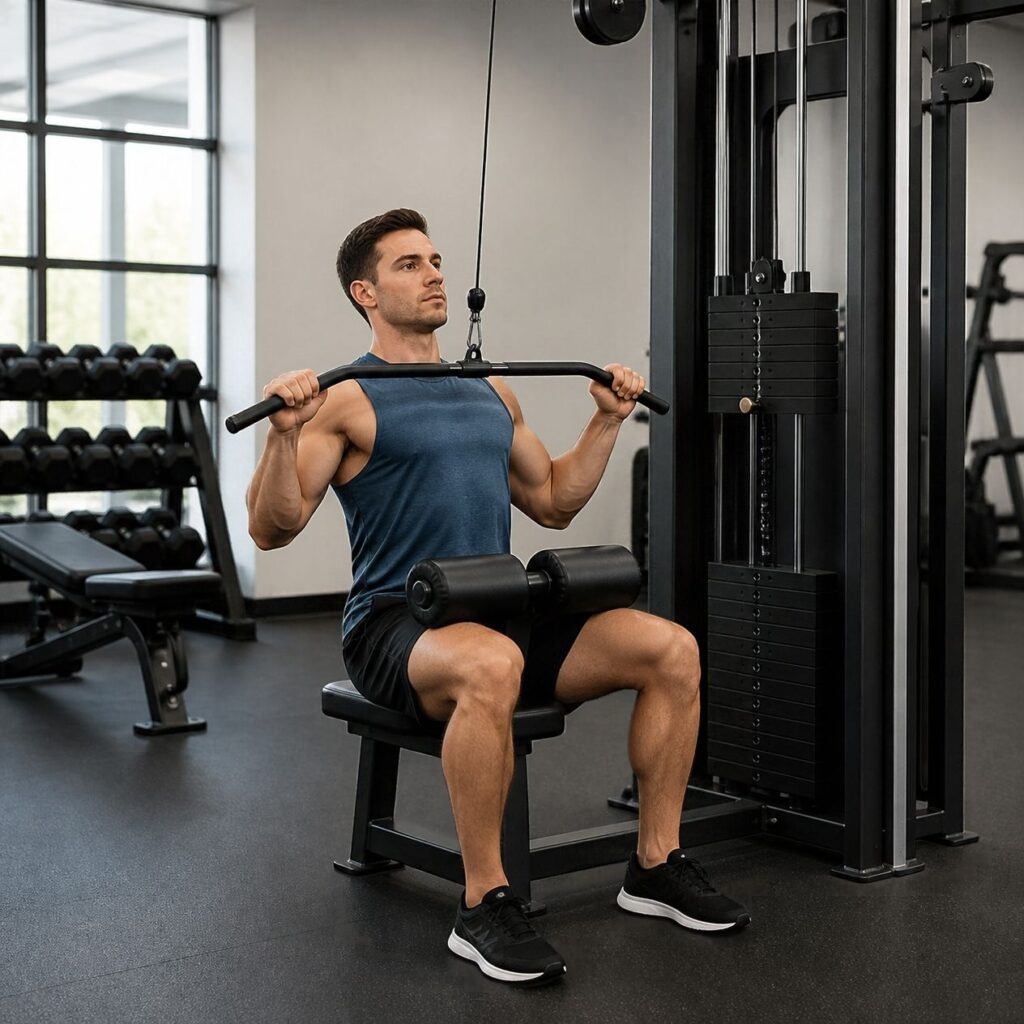
The lat pulldown targets the latissimus dorsi, the large muscles that contribute to a wider-looking back.
How to do it:
- Sit at the machine and secure your thighs under the pads.
- Grip the bar slightly wider than shoulder-width.
- Pull the bar toward your upper chest while keeping your torso stable.
- Slowly return the bar to the starting position.
Sets and reps: 3 sets of 8–12 reps.
2. Seated Cable Row
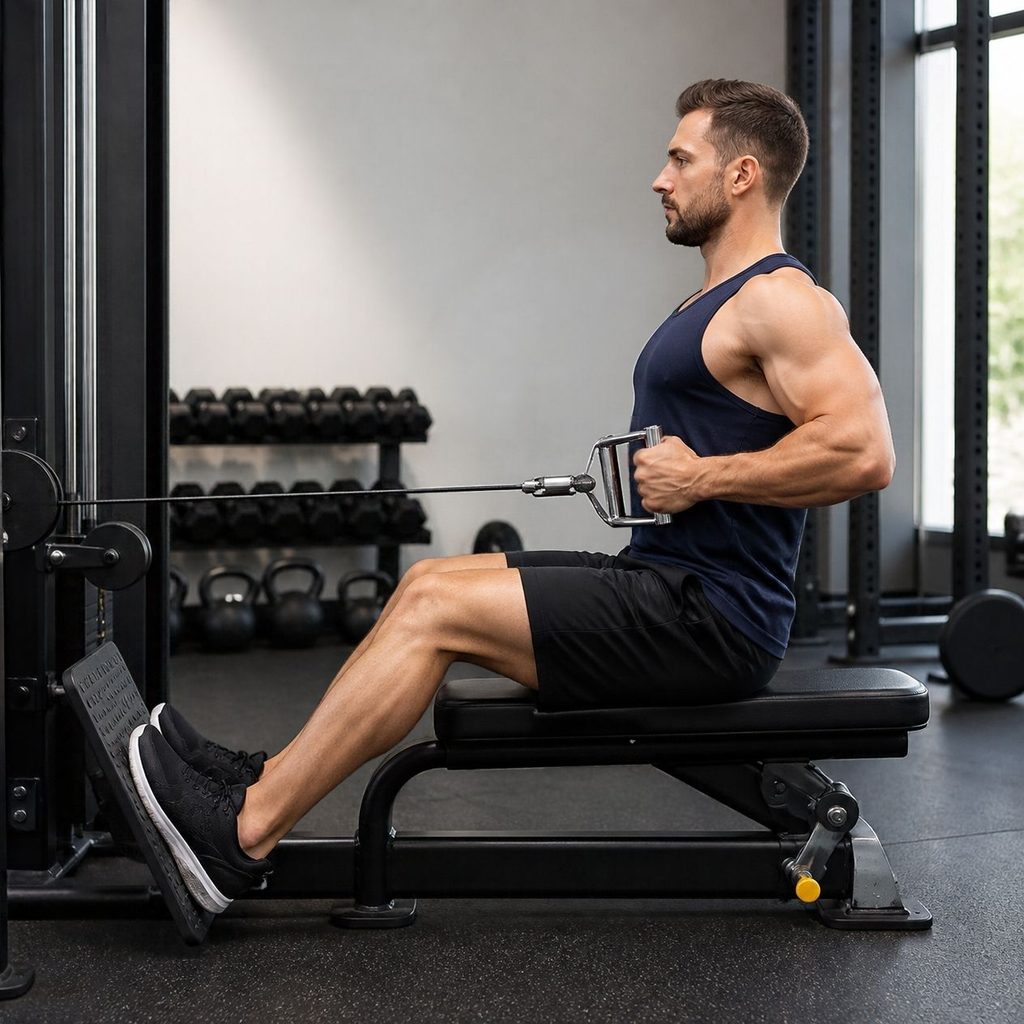
Seated cable rows train the middle back and help develop back thickness.
How to do it:
- Sit upright with your feet supported.
- Pull the handle toward your torso, keeping your elbows close to your body.
- Squeeze your shoulder blades together without leaning excessively backward.
- Slowly extend your arms to return to the starting position.
Sets and reps: 3 sets of 8–12 reps.
3. One-Arm Dumbbell Row
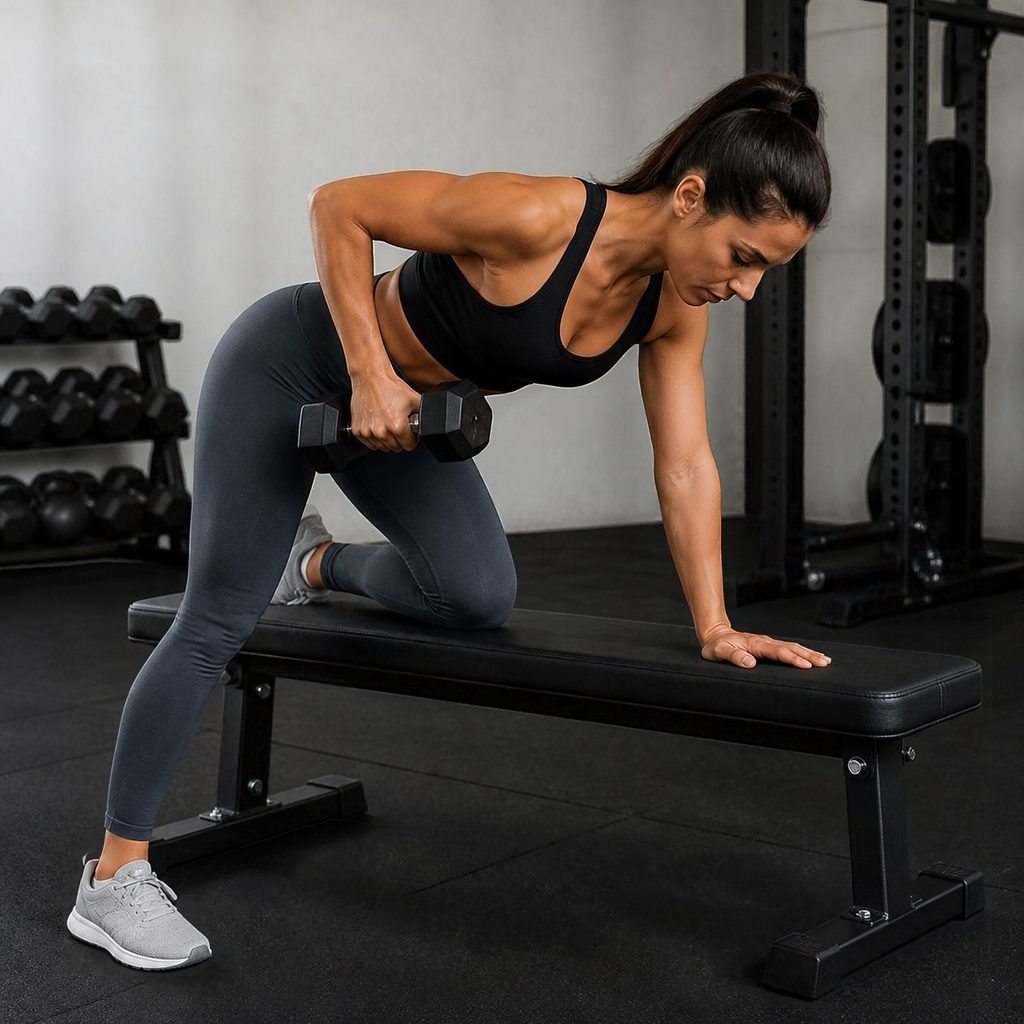
This exercise works each side of your back individually and helps you focus on controlled movement.
How to do it:
- Support one hand and knee on a bench.
- Hold a dumbbell in the opposite hand.
- Pull the dumbbell toward your hip without twisting your torso.
- Lower it slowly and repeat before switching sides.
Sets and reps: 3 sets of 8–12 reps per side.
After your workout: Finish with the O’Coach Back and Biceps Cool-Down to wind down with gentle stretches and movements.
4. Face Pull
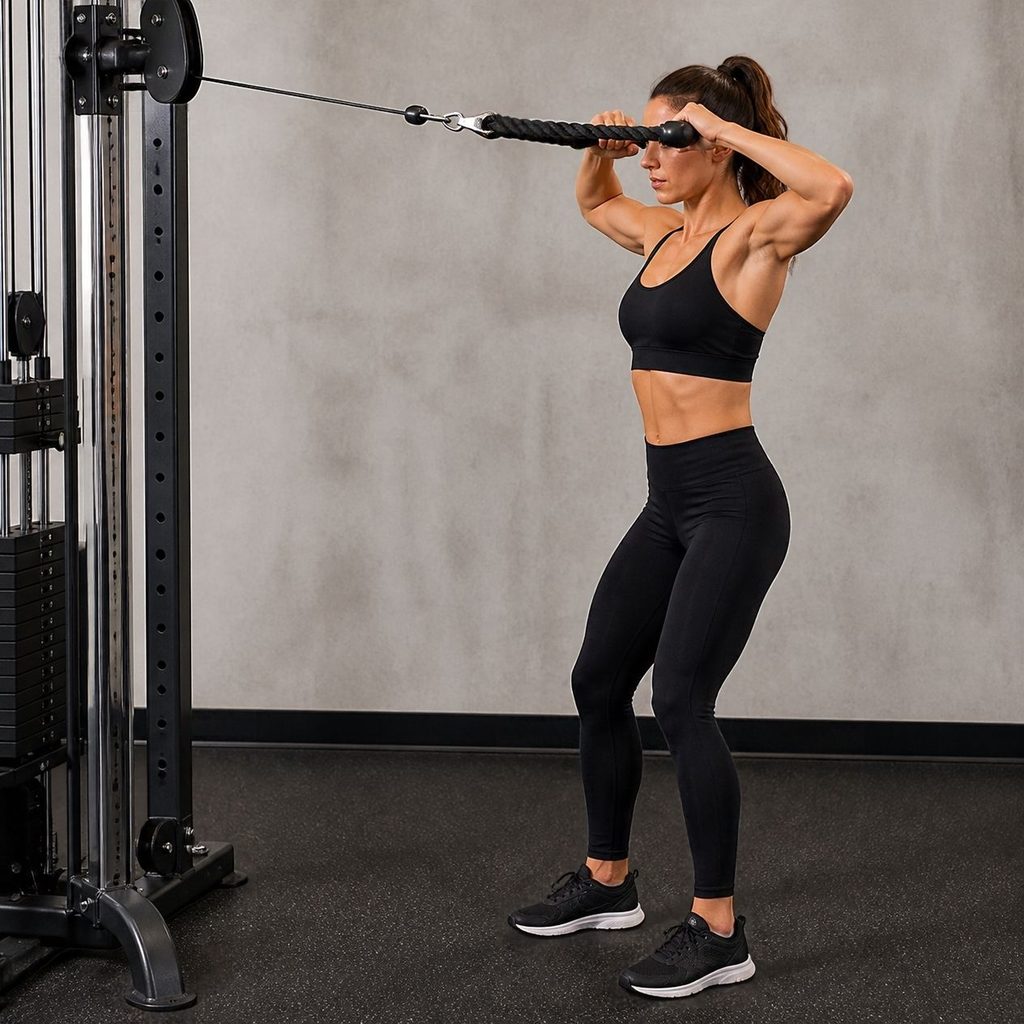
Face pulls train the rear shoulders and upper-back muscles, supporting balanced upper-body development.
How to do it:
- Set a cable attachment around face height.
- Hold the rope with both hands.
- Pull it toward your face while moving your elbows outward.
- Return slowly without shrugging your shoulders excessively.
Sets and reps: 2 sets of 12–15 reps.
5. Barbell Biceps Curl
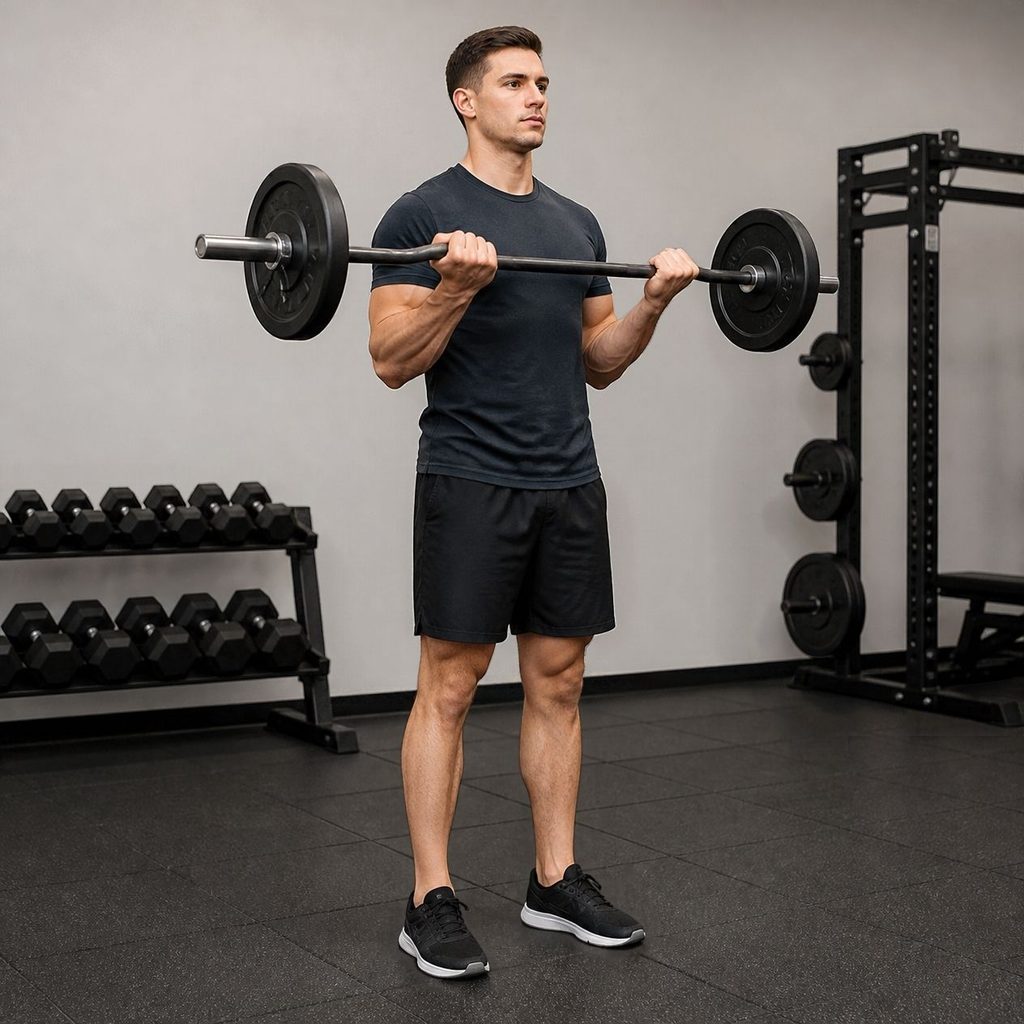
Barbell curls are a foundational biceps exercise workout choice for building arm strength and size.
How to do it:
- Stand upright and hold the bar with an underhand grip.
- Keep your elbows close to your sides.
- Curl the bar upward without swinging your body.
- Lower it slowly until your arms are nearly straight.
Sets and reps: 3 sets of 8–12 reps.
6. Incline Dumbbell Curl
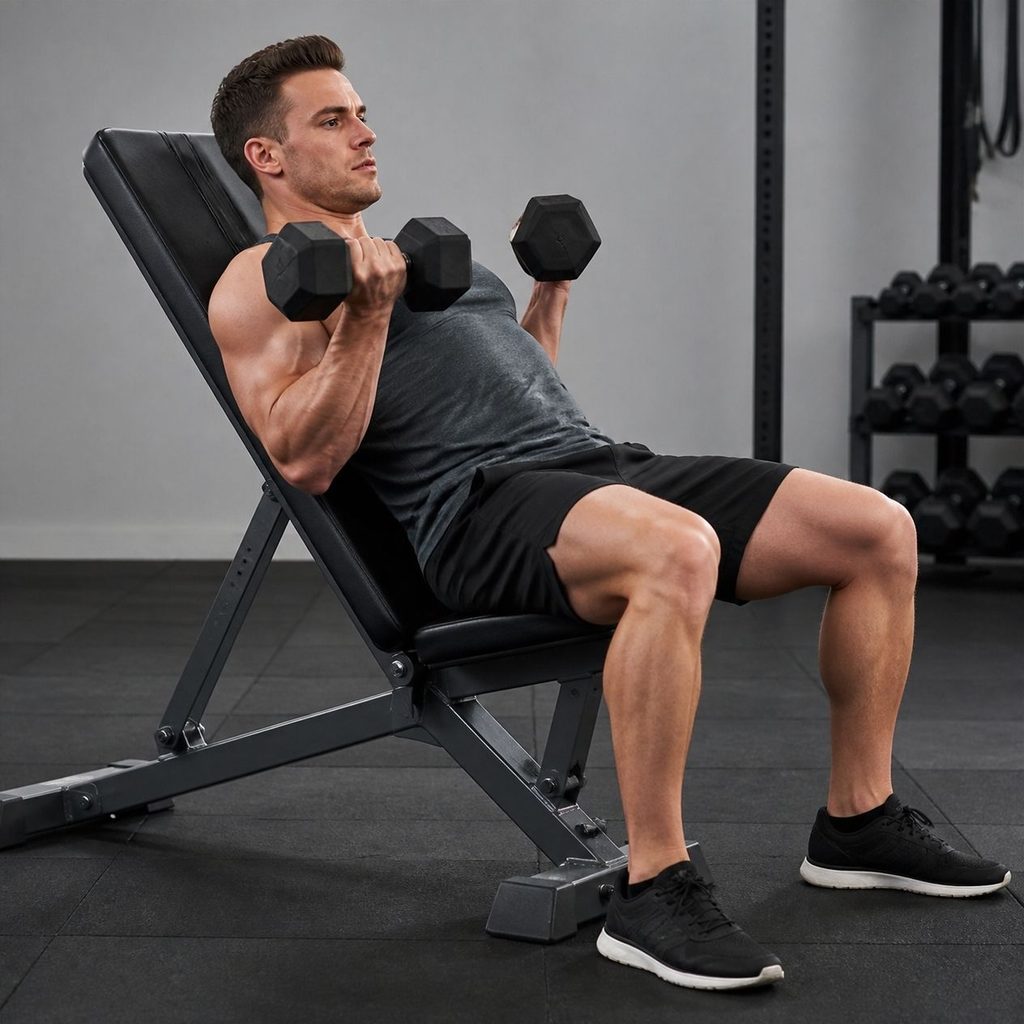
Incline curls place the upper arms slightly behind the torso, providing a different training position for the biceps.
How to do it:
- Sit on an incline bench with a dumbbell in each hand.
- Keep your upper arms relatively still.
- Curl the dumbbells toward your shoulders.
- Lower them under control through a comfortable range of motion.
Sets and reps: 2–3 sets of 10–12 reps.
A Simple Back and Biceps Workout Plan
Use this workout as a starting point and adjust the weights according to your fitness level.
| Exercise | Sets | Reps |
|---|---|---|
| Lat pulldown | 3 | 8–12 |
| Seated cable row | 3 | 8–12 |
| One-arm dumbbell row | 3 | 8–12 per side |
| Face pull | 2 | 12–15 |
| Barbell biceps curl | 3 | 8–12 |
| Incline dumbbell curl | 2 | 10–12 |
| Hammer curl | 2 | 10–12 |
Rest around 2–3 minutes between challenging compound sets and 1–2 minutes between isolation sets, adjusting as needed to maintain good technique.
If you are a beginner, start with two sets per exercise and focus on learning the movements before increasing your training volume.
Want structured guidance for your next gym session? Explore O’Coach workout routines for more exercise guidance.
How to Build Muscle With a Back and Biceps Workout
Building muscle requires consistent training, proper nutrition, and adequate recovery. Follow these tips to get the most out of your back and biceps workout:
- Increase the weight gradually as your strength improves.
- Use proper form and avoid swinging your body during exercises.
- Eat enough protein and calories to support muscle growth.
- Allow your muscles enough time to recover between workouts.
- Track your weights, sets, and repetitions to monitor progress.
Common Back and Biceps Workout Mistakes
Avoid these common mistakes to make your training more effective:
- Using excessive weight: Reduce the load if you cannot control the movement.
- Doing too many exercises: Start with a manageable routine rather than adding unnecessary volume.
- Neglecting the back: Do not spend most of your workout on curls; prioritize back exercises first.
- Ignoring recovery: Poor sleep and insufficient recovery can affect training performance.
- Expecting immediate results: Muscle growth takes consistent effort over weeks and months.
Frequently Asked Questions
Can you train back and biceps on the same day?
Yes. Back exercises already recruit the biceps, making them a practical pairing for a single workout session.
What is the best back and biceps workout for beginners?
A beginner can start with lat pulldowns, seated cable rows, dumbbell rows, and two biceps exercises. Use manageable weights and prioritize proper technique.
How many sets should I do for back and biceps?
The right amount depends on your experience and total weekly training. The sample workout above provides a starting point; beginners can reduce the sets and gradually build up.
How long does it take to build bigger biceps and a stronger back?
Progress varies with training consistency, nutrition, recovery, genetics, and starting fitness level. Noticeable strength improvements may occur before substantial visible muscle growth.


Best Back and Biceps Workout for Muscle Growth